Planting for a Resilient Future: Reforestation and Recovery After Oregon's Labor Day Fires

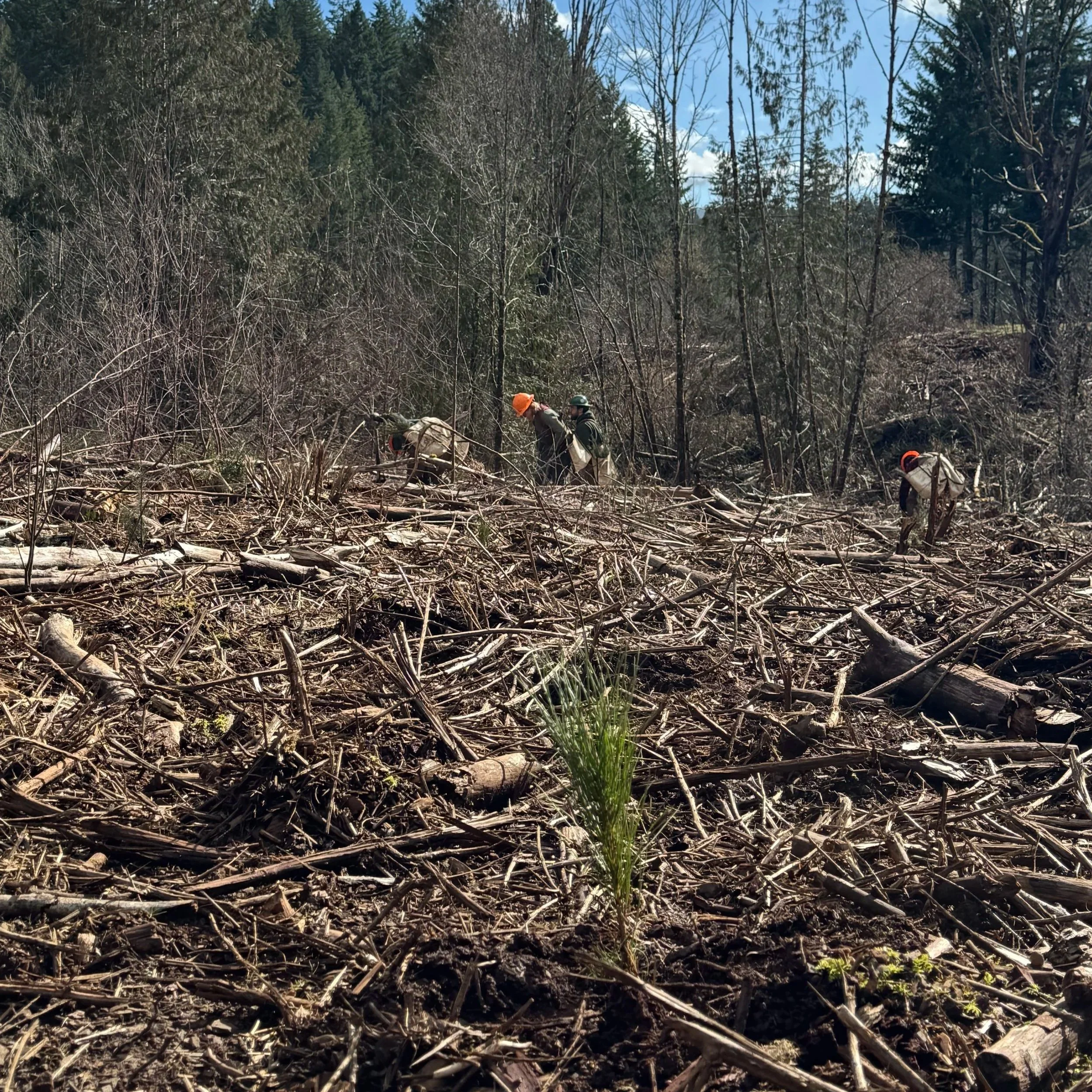
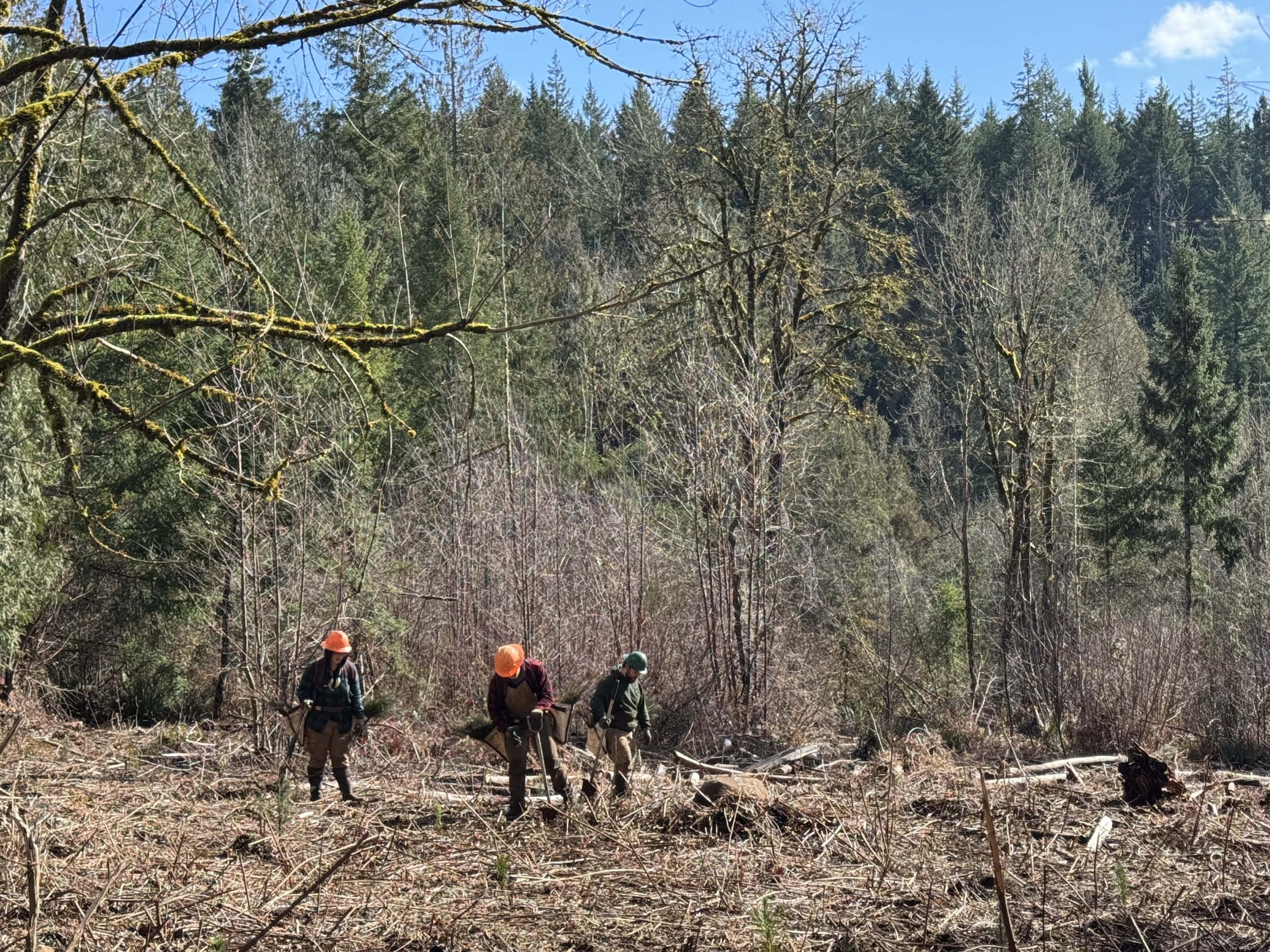
Mosaic Ecology gets ready to replant seedlings on the Delfel Property. Photo Credit Sustainable Northwest
Planting for a Resilient Future: Reforestation and Recovery After Oregon's Labor Day Fires
In September 2020, historic wildfires tore through Oregon, changing lives and landscapes in a matter of days by burning a million acres up and down the west side of the Cascade Mountains in Oregon. About a third of that land is privately owned by small forest landowners. These are families, retirees, and working folks with a plot of forest that, in many cases, was leveled by fire.
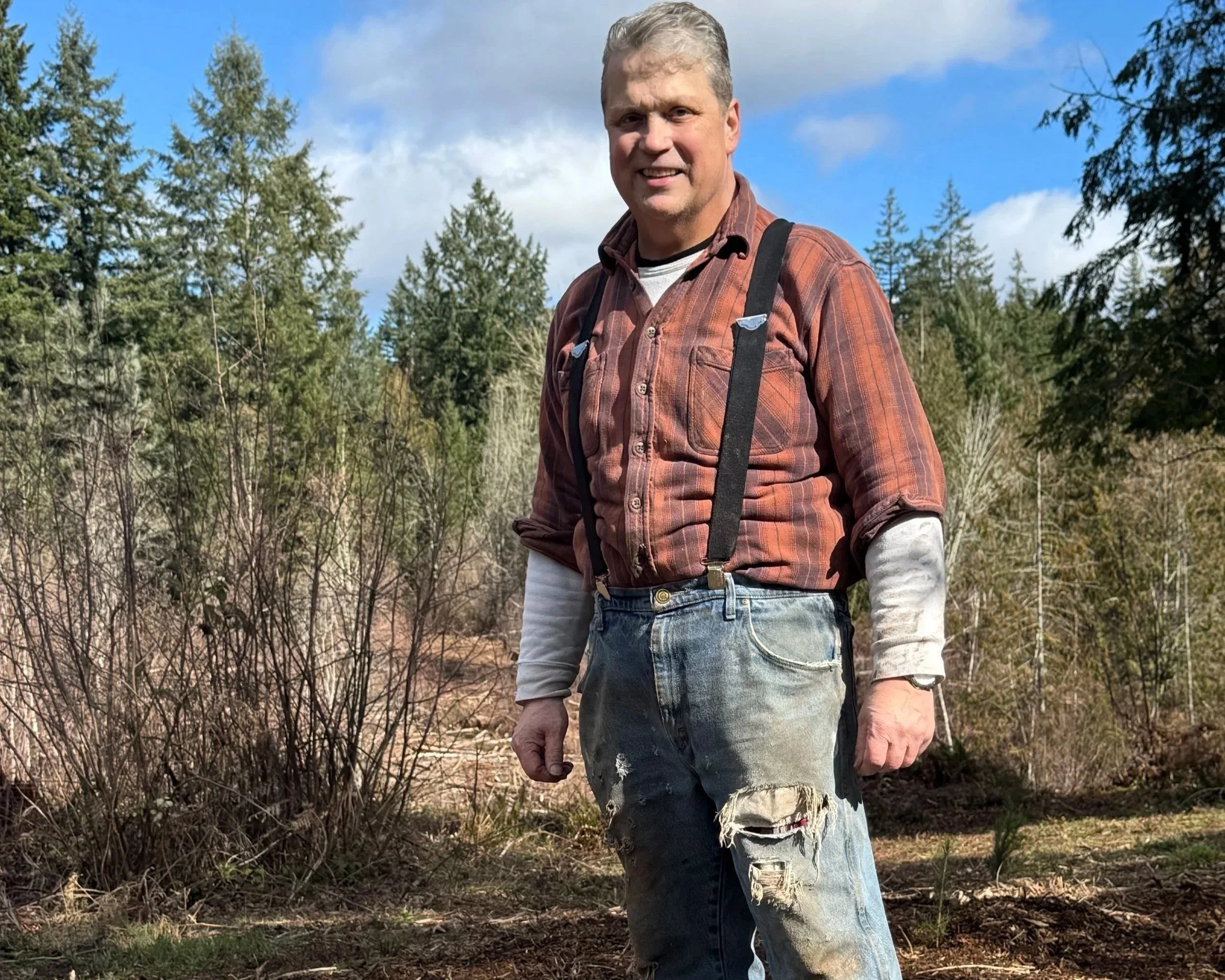
Now, six years later, these landowners are taking an important step forward: replanting their land with native, climate-adapted trees and shrubs. “It’s a way for us to feel like we’re doing something to bring this place back, not just for us, but for the future,” said one landowner, Jason Delfel, in Clackamas County.
Jason and his wife, Ann, are one of 40 landowners working with Sustainable Northwest and partners to access technical expertise, seedlings, and funding to successfully restore their forest and all the benefits it provides for their community and the region – clean water, clean air, and wildlife habitat.
A Community-Based Approach to Restoration
Sustainable Northwest is leading a multi-county effort to support small forest landowners impacted by the Labor Day Fires to restore and replant their forests in ways that are tailored to their specific sites and resilient to a changing climate. The program works with non-federal, non-industrial forest landowners with fewer than 5,000 acres.
“Family forest owners face unique challenges as they recover and restore their property after wildfires,” said Becca Shively, Senior Manager of Sustainable Northwest’s wildfire program. Some of those challenges include the high cost of seedlings and contractors, lack of time, and limited access to technical expertise. “That’s where Sustainable Northwest and local partners can help.”
Sustainable Northwest is partnering with organizations across the footprints of the Riverside, Dowty Road, Unger, Wilhoit Springs, Lionshead, Beachie Creek, Holiday Farm, and South Obenchain fires. Together, we are building a coordinated, regional approach to post-fire recovery. Together with local nonprofits and professionals, we provide access to:
Technical assistance, including forest restoration plans and timelines
Climate-adapted, site-specific native seedlings grown by local nurseries
Contractors willing to work on smaller projects
Public funding and cost-share opportunities
Planting for the Future
Each participating property receives a site-specific forest restoration plan. The species selected are not one-size-fits-all. They are carefully matched to soil type, elevation, moisture, and long-term climate projections. Some of the species being planted include Douglas fir, Giant Sequoia, Willamette Valley Ponderosa Pine, Incense Cedar, hardwood trees, and native shrubs. SNW sources all its plant material from local nurseries, and in some cases is growing site-specific plants from seed to ensure the best genetic match for local conditions.
“Each site is unique,” Shively of SNW said. “By working closely with reforestation specialists and local nurseries, we’re increasing the chances that these new forests will survive and thrive in a warmer, more fire-prone future with less water.”
A Model for the Future
“We view the comprehensive nature of this program as a pilot,” Shively said. “It is an opportunity to learn with our partners and local contractors, and build long-term capacity for wildfire recovery across Oregon.”
Six years after the Labor Day Fires, the program's first replanting efforts began this February in Clackamas County. Family forest owners are not just restoring what was lost. They are planting the next generation of forests—forests designed to withstand the realities of a changing climate.
Fire is not always bad. It can be a natural and even beneficial part of forest ecosystems throughout the Northwest. “But as the climate warms, we are seeing more frequent, larger, and more severe wildfires, which can overwhelm natural recovery processes and devastate communities,” Shively said. “Replanting with diverse, climate-adapted species is one way to reduce future risk while restoring ecological function and economic opportunity.”
This work also helps maintain rural economies. Sustainable Northwest is directing restoration investments to local contractors, nurseries, and forestry professionals, helping keep recovery dollars in rural communities.
Our Partners:
Clackamas Soil & Water Conservation District
Clackamas River Basin Council
Marion Soil & Water Conservation District
North Santiam Watershed Council
Glide Revitalization
Pure Water Partners (McKenzie Watershed Council and Upper Willamette Soil and Water Conservation District)
Oregon Department of Forestry
Jackson Soil & Water Conservation District
Our Funders:
USDA’s Natural Resources Conservation Service
U.S. Forest Service
American Forests