Pacific Northwest forests provide many community benefits, including timber, drinking water, recreation, fish and wildlife habitat, and more. But forests and the benefits they provide are facing growing threats from land development, extreme weather, drought, and increased demand for water.
Sustainable Northwest partners with communities and landowners to conserve and manage working forests that benefit local communities and economies.
When communities are engaged, forests are healthier, which is better for nature, people, and local economies.
Working with communities who want to acquire and manage the local forest to benefit their drinking water supply.

Drinking water faces unique and expanding pressures including drought, increased demand for drinking water, and conversion of forestland into homes. Managing source drinking watersheds requires dedicated attention, especially on the Pacific Northwest coast.
A handful of communities in Oregon and Washington currently own and manage their source drinking watersheds as community forests, or are in the process of starting community forests. Owning and maintaining healthy forests is an affordable way some communities choose to maintain clean drinking water compared to water treatment facilities.
One example of this is the Arch Cape Forest.
Learn more about opportunities to protect drinking watersheds along the Oregon coast using Ecotrust’s interactive mapping tool!
There is no one way to create or manage a community forest, but their unifying thread is communities deciding their futures in their forests.


Some communities focus on other benefits that a community forest can provide beyond drinking water.
In Montesano, Washington, the City Forest balances timber harvest with an extensive recreational trail network, bringing in substantial revenue to reduce the city’s water bills.
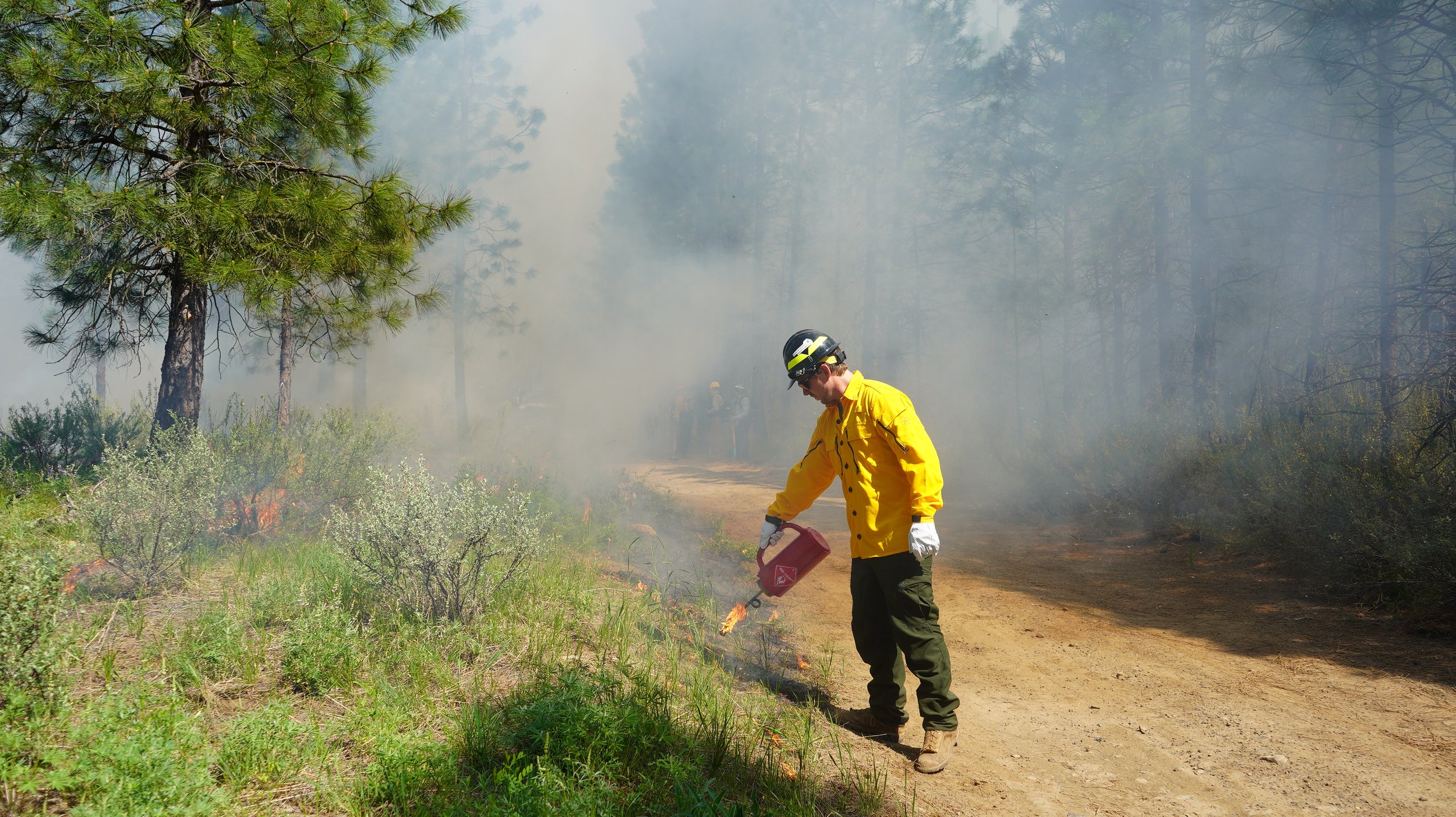
In Butte Falls, Oregon, the Butte Falls Community Forest helps protect the city from catastrophic wildfires, while the Mt. Adams Community Forest is being used as a tool to introduce prescribed fire to communities outside of Mt. Adams.
In Newport, Washington, the Indian Creek Community Forest, managed by the Kalispel Indian Tribe, is used as an educational space for Tribal members and area residents. It helps everyone better understand the local forest ecosystem, strengthens stewardship ethics, and inspires future natural resource careers.

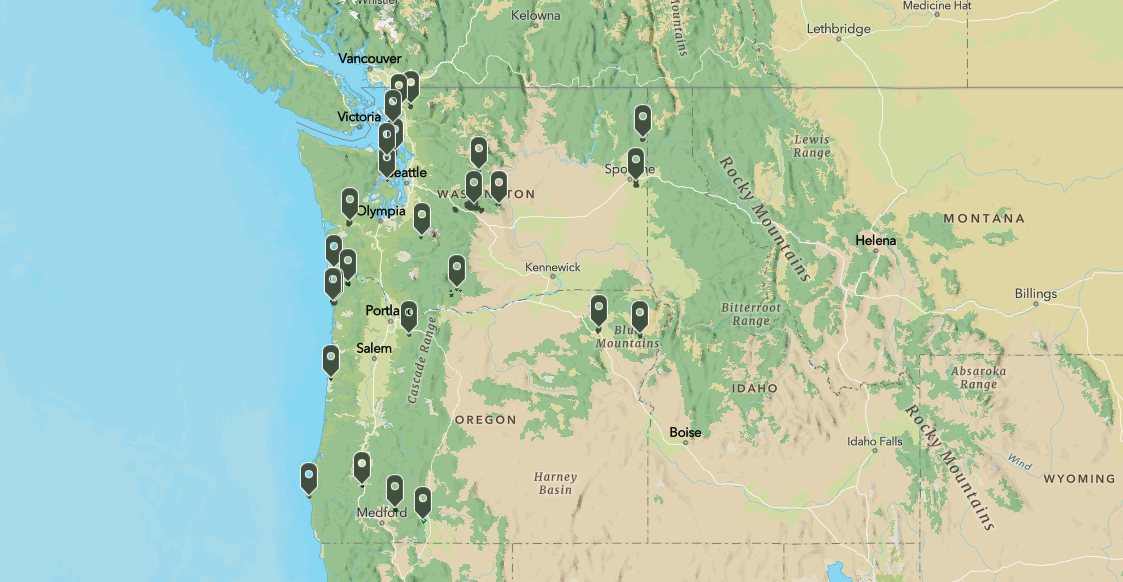
Sustainable Northwest organizes the Northwest Community Forest Coalition, a network of over 40 active community forests spanning upwards of 215,000 acres. The coalition shares information, offers networking, and helps increase the capacity of the community forest movement.
The Northwest Community Forest Coalition Newsletter keeps you informed about events, meetings, and publications.