Northwest Douglas-fir Beams Get an Environmental “Nutrition Label”
A new Environmental Product Declaration gives builders verified data on large Douglas-fir beams, posts, and columns, and rewards forests grown longer for carbon, clean water, and wildlife.

Architects, builders, and their clients want to know how their building materials affect the environment. More and more, they also want materials that do some good.
Building with wood instead of concrete or steel has carbon benefits. Large timbers can add even more. The trees that produce them are grown longer than the standard harvest cycle, or “rotation.” Those extra years let each tree store more carbon, and they give the forest more time to support clean air, clean water, and wildlife habitat.
Now builders have the data to back that choice. Sustainable Northwest is the owner of a new Environmental Product Declaration (EPD) for large Douglas-fir beams, posts, and columns grown and milled in the Pacific Northwest. An independent expert verified it.
We worked with CORRIM, a wood products research group that developed the EPD, and Port Blakely, a family-owned forestry company that provided data on how these trees are grown. With the EPD in hand, design teams can count these “solid sawn timbers” toward green building credits, such as LEED, and include them in embodied carbon calculations.
What is an Environmental Product Declaration (EPD)?
An EPD is like a nutrition label for a building material. It reports a product's environmental impacts across its life cycle, based on a standardized life cycle assessment (LCA).
This industry-average EPD covers solid sawn Douglas-fir timbers used in heavy timber construction and exposed architectural work. Think timber frame homes with large exposed beams, plus large commercial and institutional buildings with exposed wood.
Developed by: the Consortium for Research on Renewable Industrial Materials (CORRIM)
Declaration owner: Sustainable Northwest
Independent verification: Thomas Gloria, Ph.D., Industrial Ecology Consultants
Forestry data: Port Blakely, reflecting the extended rotations needed to grow large-diameter Douglas-fir logs
Why the EPD matters for low-carbon building
More and more projects require transparent environmental data before a material can be specified. Without an EPD, even a beautiful, locally grown timber can be left out.
This EPD lets design teams use Douglas-fir timbers in whole-building life cycle assessments, embodied carbon calculations, and green building rating systems such as LEED.
“This Environmental Product Declaration helps ensure Pacific Northwest Douglas-fir solid sawn timbers can compete in projects that increasingly require transparent environmental information,” said Jason Dorn, market development manager at Port Blakely.
How longer rotations benefit forests, carbon, and rural mills
Big timbers come from big trees, and big trees take time. That's where this EPD connects to forest health.
“Trees sequester carbon at a higher annual average rate when they’re grown even just a bit longer than standard rotation lengths. The sweet spot is referred to as ‘biological rotation age,’” said Evan Schmidt, wood markets program manager at Sustainable Northwest.
“Economic and supply chain factors tend to incentivize landowners toward shorter rotations,” Schmidt continued. “But when markets and buyers recognize the additional value of longer rotations and the products associated with them, like solid sawn timbers, landowners earn more and then have the means and incentive to grow their trees longer. This EPD is a step toward improving that market recognition.”
Dorn agrees: “It recognizes the long-term forest stewardship needed to grow these unique products and highlights the value of forests managed in extended rotations to produce large diameter Douglas-fir, including cleaner water and air, healthier wildlife habitat, and long-term carbon storage.”
There's a catch. Only certain mills can process large logs. If those specialized mills close, or demand dries up, landowners can be pushed back to shorter rotations. Strong markets for products like these timbers help keep that mill capacity, and the rural jobs that come with it, in our communities.
This work builds on Sustainable Northwest’s wood markets program track record, including sourcing all of the wood for the new Portland International Airport main terminal from local, family, and Tribally owned forests managed for sustainability.

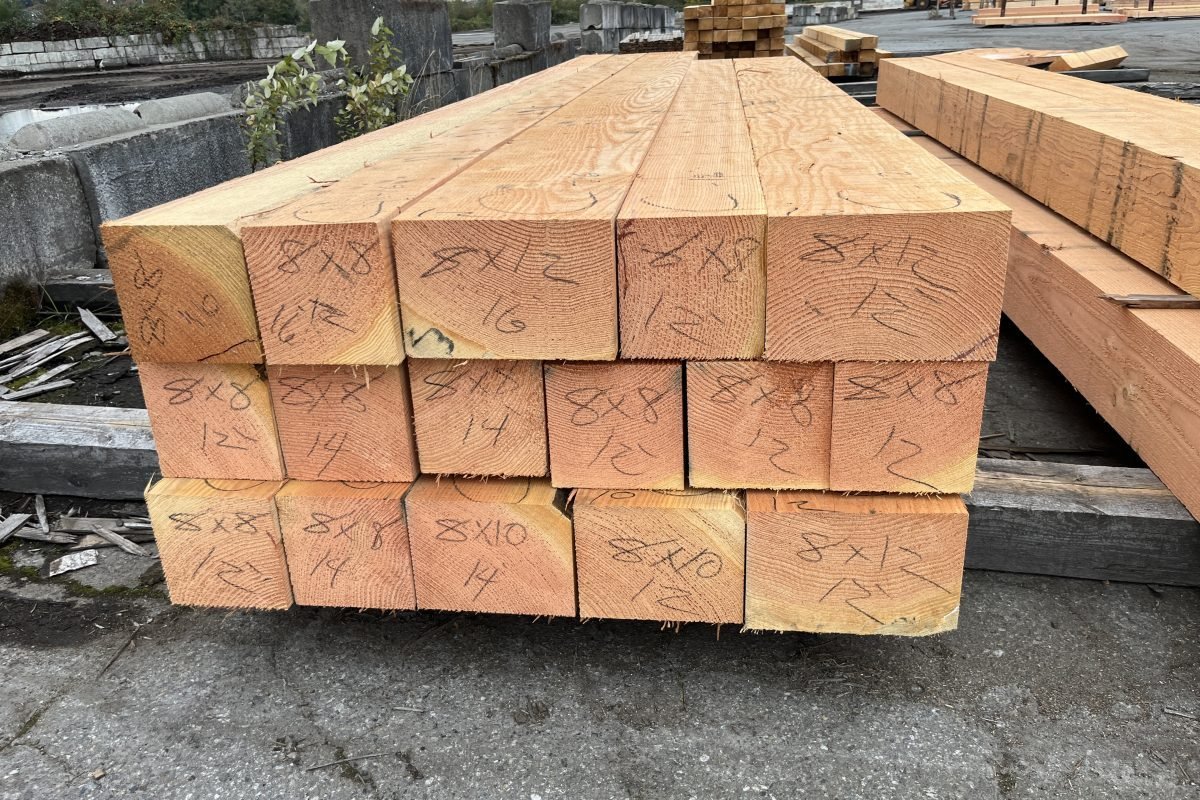


Find and specify Douglas-fir timbers
Regional suppliers include Canyon Lumber, The Buse Mill Company, Fritch Mill, Manke Lumber Company, Sundher Timber Products, and Elk Creek Forest Products.
Read the full EPD in CORRIM's library of wood product LCAs
Need help sourcing? Our Wood Advisor program connects designers and builders with responsibly grown Northwest wood.
Frequently Asked Questions
-
An EPD is like a nutrition label for a building material. It reports a product's environmental impacts across its life cycle, based on a standardized life cycle assessment (LCA).
-
This industry-average EPD covers large Douglas-fir beams, posts, and columns grown and milled in the Pacific Northwest. These solid sawn timbers are used in heavy timber construction and exposed architectural work, from timber frame homes to large commercial and institutional buildings.
-
The Consortium for Research on Renewable Industrial Materials (CORRIM) developed the EPD, and Sustainable Northwest is the declaration owner. Thomas Gloria, Ph.D., of Industrial Ecology Consultants independently verified it. Port Blakely, a family-owned forestry company, provided forestry data reflecting the extended rotations needed to grow large-diameter Douglas-fir logs.
-
Yes. With the EPD in hand, design teams can count these solid sawn timbers toward green building credits, such as LEED, and include them in whole-building life cycle assessments and embodied carbon calculations.
-
Trees that produce large timbers are grown longer than the standard harvest cycle, or “rotation.” Those extra years let each tree store more carbon, and they give the forest more time to support clean air, clean water, and wildlife habitat. When markets recognize the value of longer rotations, landowners have the means and incentive to grow their trees longer.
-
Regional suppliers include Canyon Lumber, The Buse Mill Company, Fritch Mill, Manke Lumber Company, Sundher Timber Products, and Elk Creek Forest Products. Sustainable Northwest's Wood Advisor program connects designers and builders with responsibly grown Northwest wood.
All photo credits: Port Blakely and Sustainable Northwest