
How One Oregon Family is Restoring Their Forest After the 2020 Labor Day Fires
The Do Gooders: Stories of people putting the Pacific Northwest's land and communities first
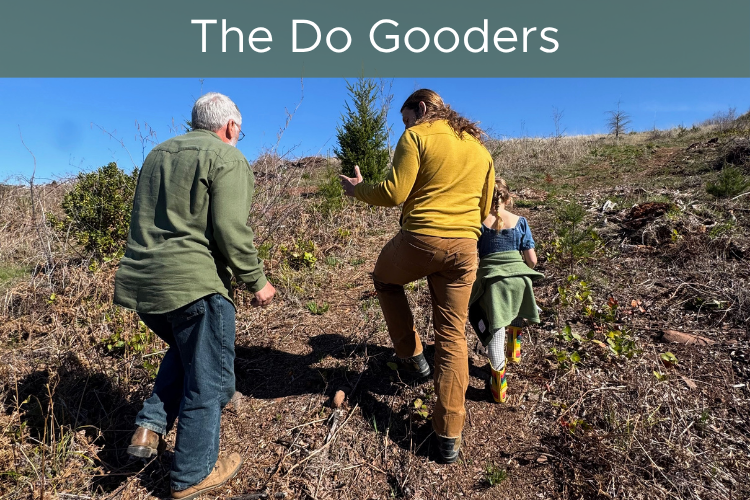
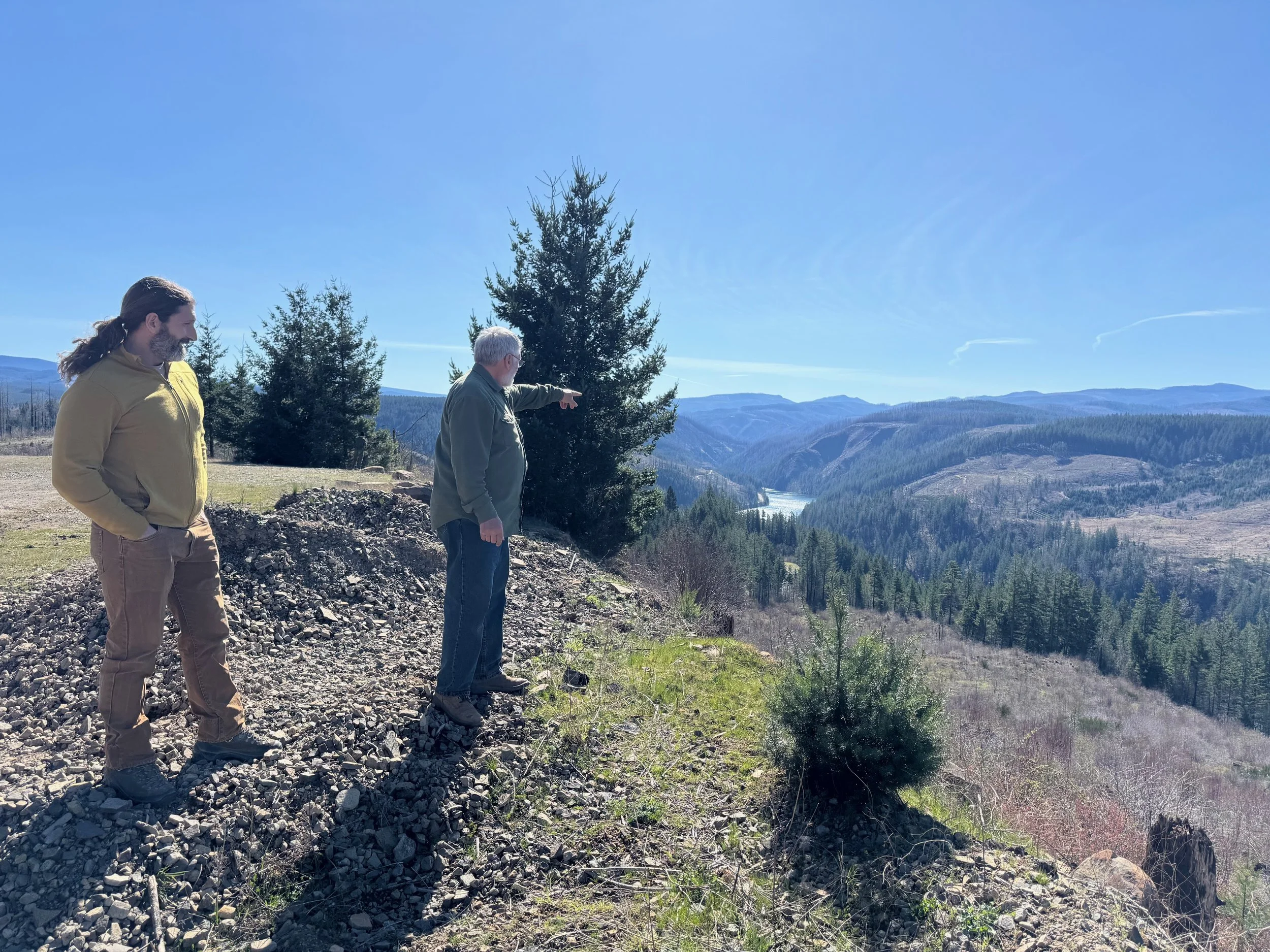
From left to right: Kevin, Mark, and Roan Shaw.
When the Labor Day megafires swept through Oregon in September 2020, they left behind more than a million acres of scorched land on the west side of the Cascade Mountains. About a third of that land is privately owned – much of it by families, retirees, and other regular folk who saw the land burn, but could not restore it to health by themselves.
The Shaw family is one of those families.
Starting Over on Burned Ground
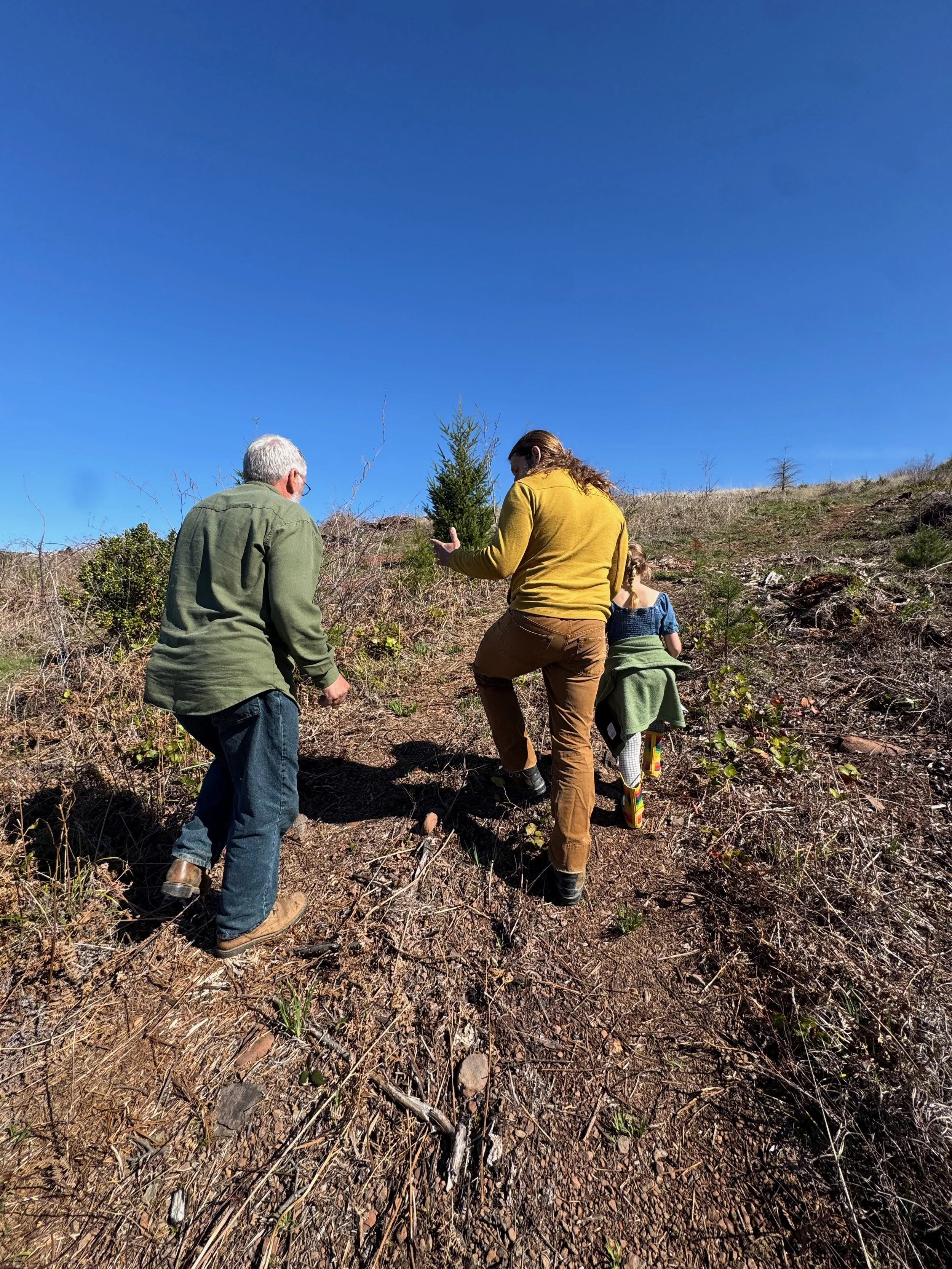
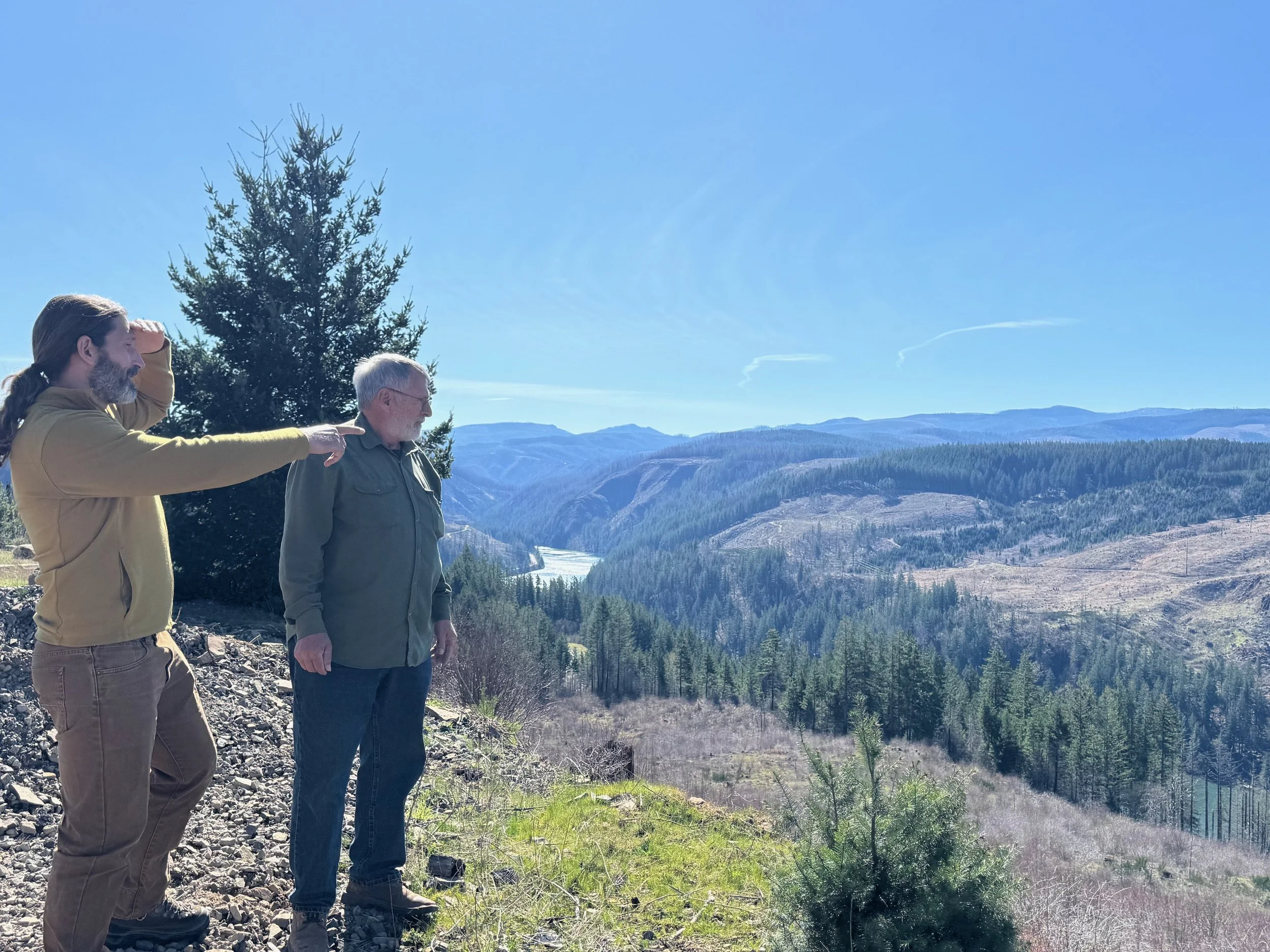
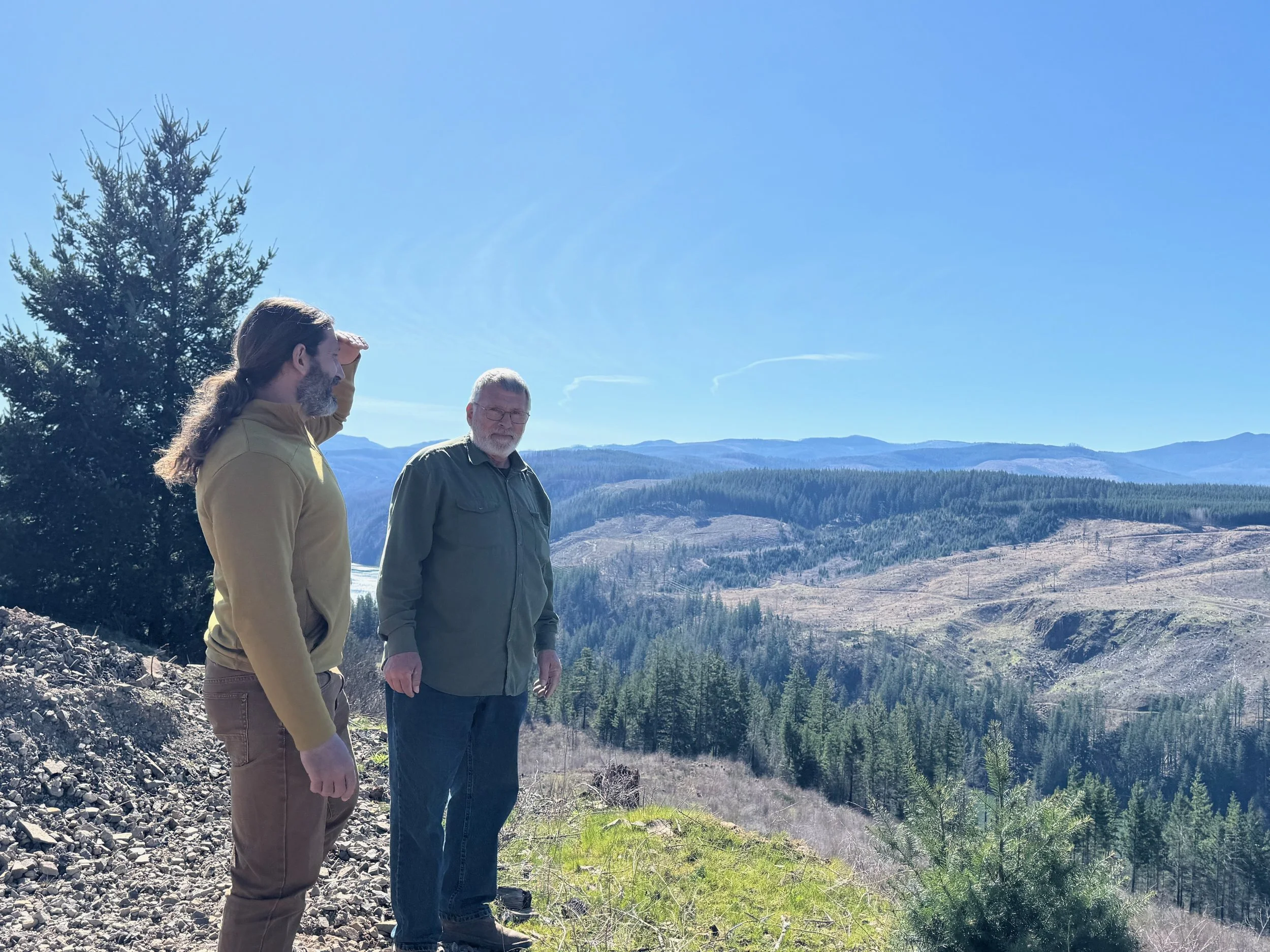
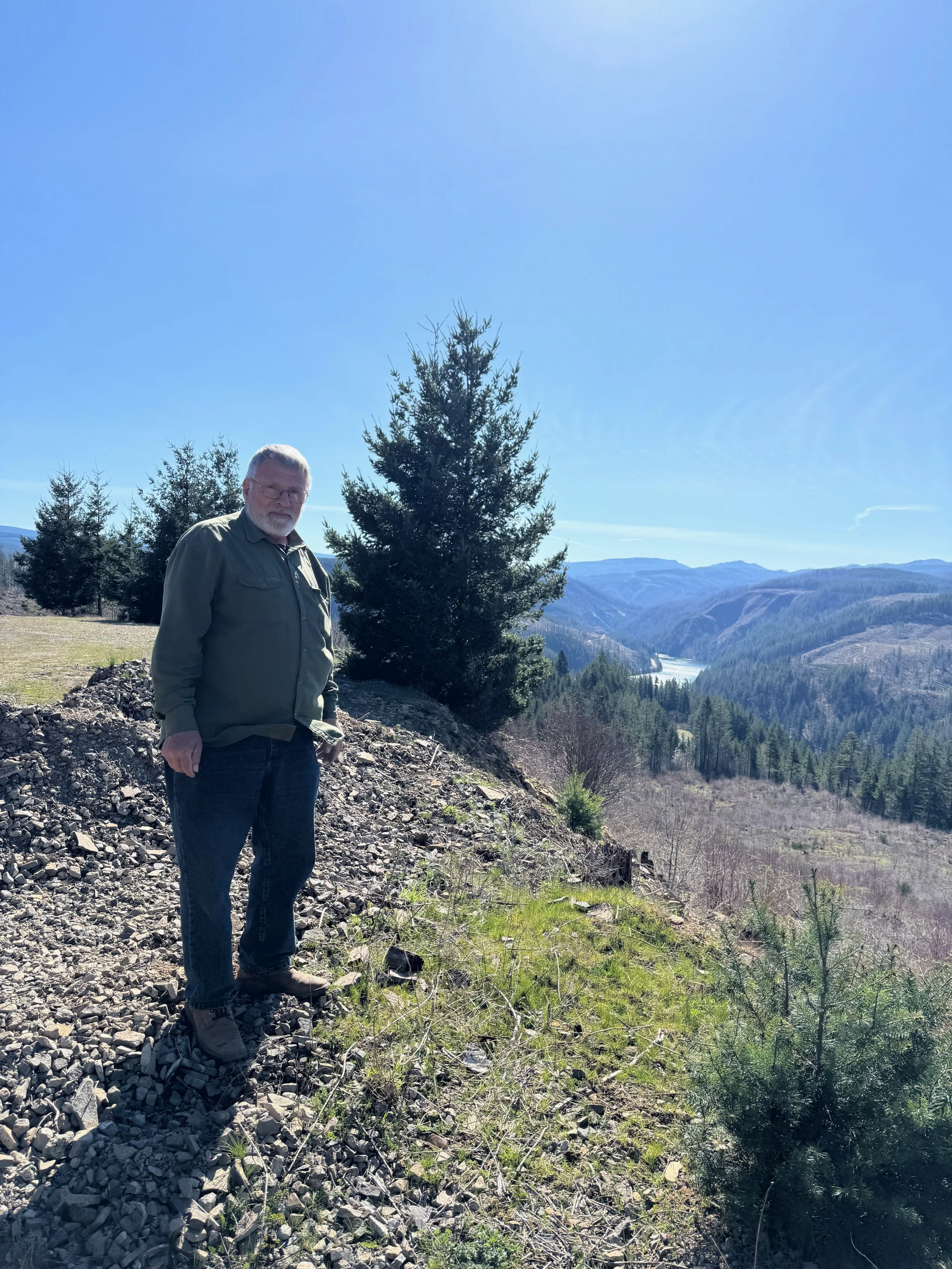
Mark Shaw and his wife, Katharine Kallus, built their home on about 20 acres of land in western Oregon in 2023. They wanted more space, a view, a place to spread out and let their kids and dogs roam. The property they bought had already been burned in the 2020 Labor Day Fires. The trees were gone, the hillside quiet.
“It was kind of like a tornado had gone through. There were a bunch of dead trees. We cleaned up a lot of the downed trees and brush after the fire. We had a lot of brush piles,” said Kevin Shaw.
Kevin and Sue Shaw, Mark’s parents, are retirees who moved to Oregon several years ago to help Mark and his wife raise their two young children. They live with Mark and his family on the property. Kevin and Sue are sturdy, midwestern farmers, so they were not deterred by the 20 acres of burned forestland that Mark and his wife had purchased after the fire. In fact, Kevin saw it as a retirement project and began buying heavy machinery to help. Most days, he’s working on the land from morning until evening, with his two elderly dogs in tow.
When Kevin’s son Mark learned that Sustainable Northwest (SNW) had started a reforestation program for forests that burned in the Labor Day megafires, he applied and got to work. Today – with the help of SNW, Clackamas Soil and Water Conservation District, contractors, and several crucial funders, all organized by SNW – between 5,000 and 6,000 newly planted Douglas fir trees are in the ground on Mark and his wife’s 20 acres, joined by oak and ponderosa pine.
They are part of a larger project SNW is leading to plant 200,000 climate-adapted trees on forests owned and manage by small, private landowners in the footprints of the 2020 Labor Day Fires.
“Working with SNW, Clackamas SWCD, and this program was so easy,” Mark said. “And it’s awesome that you all empower the landowner. The landowner can take an active role as much or as little as they want to. It’s a very, very cool program. Hopefully things like this can continue on, at least in some capacity, because it’s been phenomenal.”
A Family Committed to the Land
The story grew from there. Across the road is another 120 acres of burned forestland, which Mark’s parents had rented for several years from Weyerhaeuser. It offered the family more space for the family and dogs to walk, play, and enjoy. When Weyerhaeuser decided to sell, Kevin decided to buy it. He sold his old farm in Illinois and bought the Oregon property. Via SNW’s program, that 120 acres will also be replanted. It is scheduled for winter 2026/2027.
Mark said they would not have been able to achieve so much, so fast without SNW’s reforestation program.
“If you walked away from that parcel for 100 years, maybe it would eventually come back. But with the invasive species loaded in, especially the blackberries, it’s almost impossible for reforestation to happen naturally,“ Mark said. “Now not only is the forest being restored, it's getting jumpstarted. So it looks better already, but in 15 to 20 years, it's going to be looking good, and in 30 years, it's going to look awesome.”
Why It Matters
What the Shaw family is doing reflects the kind of community investment Sustainable Northwest was built to support. Since 1994, we’ve been bringing people, ideas, and innovation together so that nature, local economies, and rural communities can thrive. The Shaws — across two generations and two properties — are living proof of what that looks like on the ground. Their forest is coming back. And the family does not have to go it alone.
“The land is forever. It’s a true community resource. Clean air, clean water, and recreation habitat. That’s the goal for it. But you have to be a good steward of the land. Without this program, it might have taken 100 years. This program accelerated what we were already hoping to do and really made it possible.”
How you can help
To support this work, please consider becoming a member of The Tree Rings at Sustainable Northwest by making a recurring monthly, quarterly, or annual donation here.
Frequently Asked Questions
-
Wildfires now burn hotter and longer because of the compounding effects of warmer summers and unhealthy forest conditions. These fires have serious consequences for ecosystems and communities, triggering a decades-long process of rehabilitation and recovery.
In Oregon, the 2020 wildfire season was unprecedented in its severity, burning nearly 1 million acres of land during the Labor Day fires. Over a third of that land was privately owned, disproportionately impacting small, non-industrial landowners and residents.
With support from the USDA Natural Resources Conservation Service, Sustainable Northwest is partnering with local soil and water conservation districts, watershed groups, and long-term recovery organizations to help these private landowners recover. We facilitate access to funding, technical assistance, contractors, and native plants needed to re-establish healthy, climate-resilient ecosystems.
Sustainable Northwest views this effort as a pilot from which we can learn lessons with our partners, build broader statewide capacity for wildfire recovery work, and better meet the needs of communities impacted by future fires.
-
Sustainable Northwest’s post-fire recovery program assists non-federal forest and non-industrial landowners owning less than 5,000 acres within the Lionshead, Beachie Creek, Holiday Farm, Riverside, Dowty Road, Unger, Wilhoit Springs, South Obenchain, and Archie Creek fire footprints, which all burned in 2020 in western Oregon around or after a spark ignited a natural fire, and winds quickly spread the fire throughout the western Cascade mountains. Eleven people died in the fires, and more than 1 million acres burned.
-
Private land stewards manage resources that benefit us all: clean air, wildlife habitat, clean water, and sometimes recreational opportunities. Our entire region benefits when these lands are healthy.
-
Critical funders of this work include USDA’s Natural Resources Conservation Service, U.S. Forest Service, and American Forests.
-
Partners include: Clackamas Soil & Water Conservation District, Clackamas River Basin Council, Marion Soil & Water Conservation District, North Santiam Watershed Council, Glide Revitalization, Pure Water Partners: (McKenzie Watershed Council and Upper Willamette Soil and Water Conservation District), Oregon Department of Forestry, and Jackson Soil & Water Conservation District, Natural Resources Conservation Service.
