Community Forest Spotlight: Chimacum Ridge

During the grand opening of Chimacum Ridge Community Forest in September 2025, two guests take advantage of a bench along the forest trails - courtesy Jefferson Land Trust.
Sustainable Northwest coordinates the NW Community Forest Coalition – a network of about 50 community forests in Oregon and Washington. The Pacific Northwest has the largest concentration of community forests in the nation. Chimacum Ridge Community Forest in East Jefferson County, Washington, is one of them.
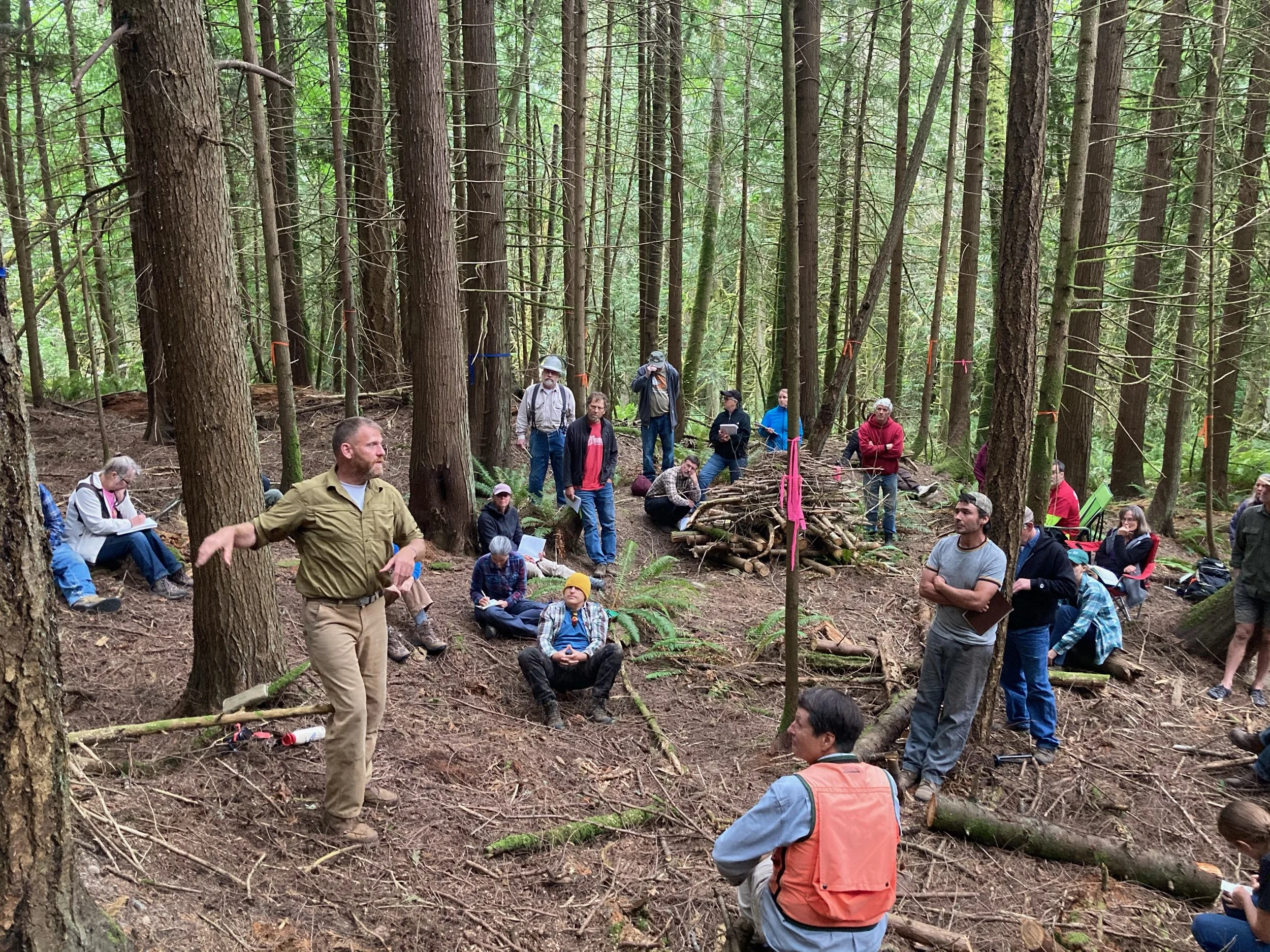
Located on the eastern side of Washington's Olympic Peninsula, nested between Center and Beaver valleys in East Jefferson County, Chimacum Ridge Community Forest has been in public hands since the Jefferson Land Trust purchased it in 2023. Just a few years prior, the forest was in danger of being transitioned to development.
The forest officially opened to the public in September 2025, a project long in the making by the Jefferson Land Trust. From sustainable resources, recreation opportunities, cultural resources, purifying water and much more, the Chimacum Ridge Community Forest is interconnected with its community in many more ways than just one.

A local, sustainable wood source
One of Chimacum Ridge Community Forest’s biggest roles in Jefferson County is being a local source of wood. The forest provides this resource to local non-profit and entrepreneurial ventures, including carpentry, woodworking, manufacturing, farms, and wood boat building. All of this supports the local economy.
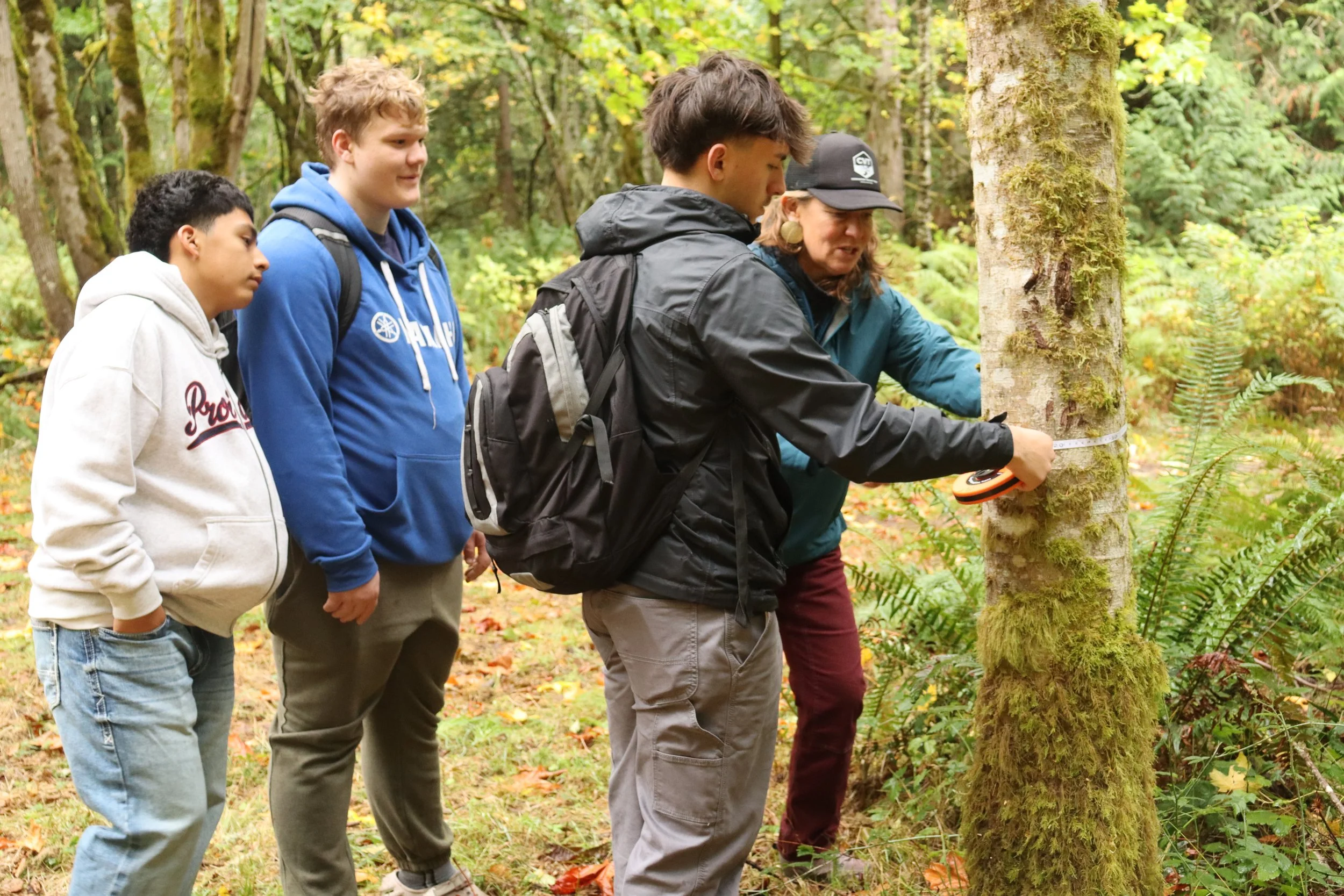
For instance, the Northwest School of Boatbuilding in Jefferson County uses wood from Chimacum Ridge Community Forest for a variety of projects. In a video project by Northwest Community Forest Coalition, the school’s executive director, Betsy Davis, says it is an important experience for students to see the materials they work with in the natural environment of community forest. Chimacum Ridge Community Forest also supplied some of the wood used in the Portland International Airport’s new main terminal.
A place for cultural customs and activities
The Chimacum Ridge Community Forest provides opportunities for several Coast Salish Tribes to connect to some of their ancestral lands—particularly, the Port Gamble S’Klallam, Jamestown S’Klallam, Chemakum, and Skokomish tribes. Here, the forest supports local tribe’s traditional food, tree, and fiber harvests. For example, these tribes harvest cedar bark from select trees in this community forest for traditional basket weaving.
A source of clean water
With Chimacum Ridge Community Forest’s location between the Center and Beaver valleys in the Chimacum watershed, the forest has many water quantity and quality benefits. The forest filters rainwater, helps prevent erosion, and keeps more nutrients in the forest for native plants, fish, and wildlife
A protector of wildlife habitat
Countless species call Chimacum Ridge Community forest home. On the property, you can find Douglas fir, western red cedar, western hemlock, Stika spruce, big-leaf maple, red alder, bitter cherry, willows, salal, mushrooms, serviceberry, evergreen huckleberry, Oregon grape, and elderberry. The forest also holds about 27 acres of freshwater wetlands and acts as an important source of clean, cool water for migratory salmon.
A space to recreate
In the Chimacum Ridge Community Forest, visitors have various low-cost or no-cost opportunities to explore the landscape. Visitors can hike, bike, hunt (with some limitations), horseback ride, view wildlife, forage and gather, and study nature on approximately 10 miles of beginner and moderate trails
Maintaining Chimacum Valley’s health
Chimacum Ridge Community Forest plays a vital role in maintaining the health of Chimacum Valley and its residents. The forest keeps the air clean, purifies the water, and helps the sky stay dark. It also protects local farms and food from runoff and pollution. In a video project by Northwest Community Forest Coalition, the co-founder of Finneriver Farm and Winery, Crystie Kisler, said, “Whatever activities happen on the ridge, from an ecological point of view, are going to affect farmers down in this valley.”