
Jensen Farms: Connecting Communities Through Rural Agriculture Electrification
By: Maia Gutmann, Clean Energy Intern
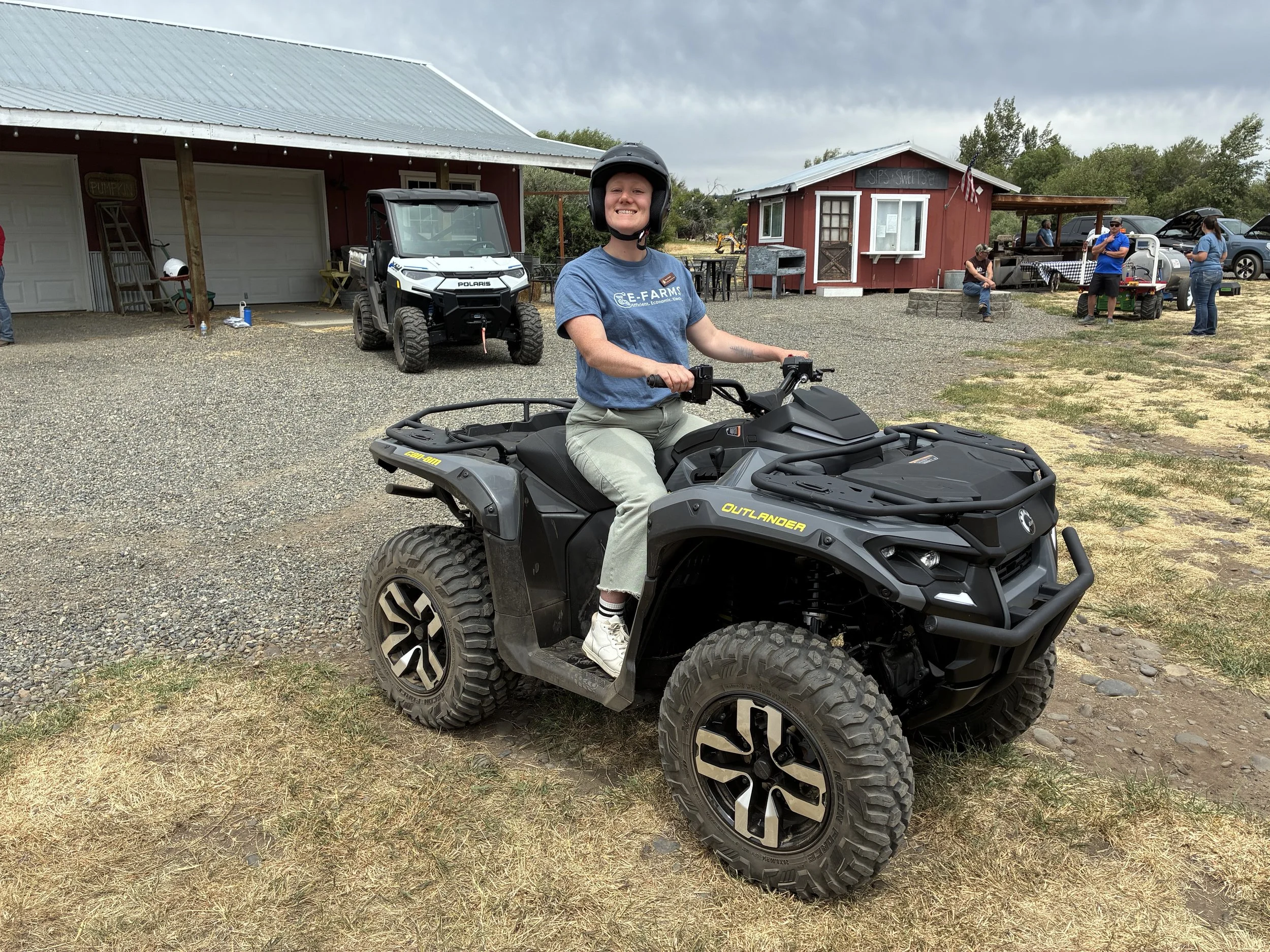
E-Farms representative Sarah Gledhill takes the 2026 Can-Am Outlander Electric for a spin around Jensen Farms. Photo credit, Maia Gutmann.
The smell of kettle corn drifted across Jensen Farms as visitors mingled around the fleet of equipment, poking their heads into the cabs of the vehicles and testing out the comfort of the seats. Nearby, John Jensen, co-owner of the farm with his wife, Hilary, was popping corn in a well-worn copper kettle, a printed sign nearby reading “Fresh Popped Kettle Corn, Powered by Ford… Popped Ford Tough.” The machine popping it was plugged into a Ford F-150 Lightning, with the electric truck’s battery powering the entire popcorn operation. It was a crisp morning in Ellensburg, Washington, and Jensen Farms, also known as “The Patch,” had opened its gates for High Voltage Harvest, a demo day built to show neighboring farmers what electric agriculture equipment can actually do.
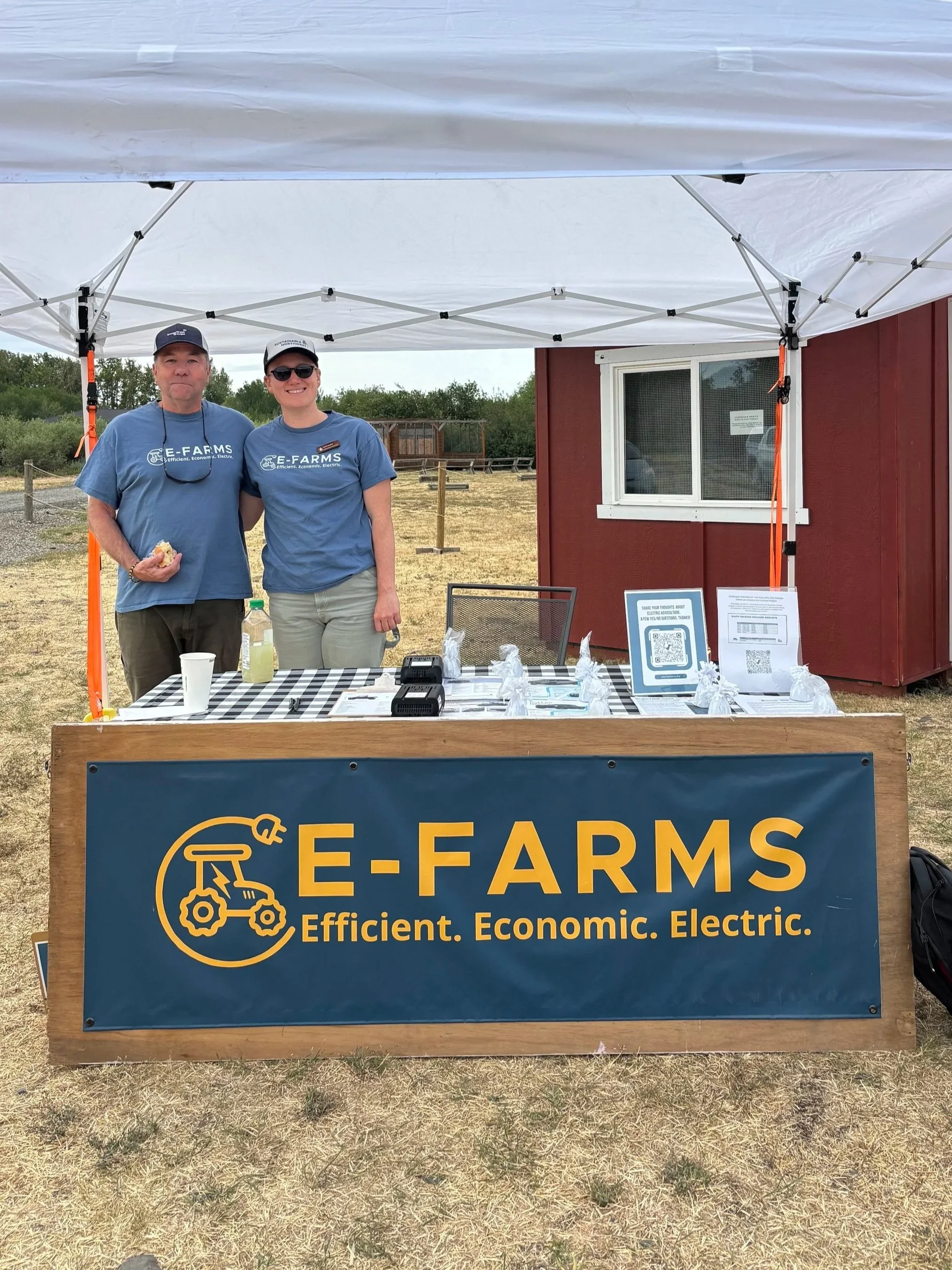
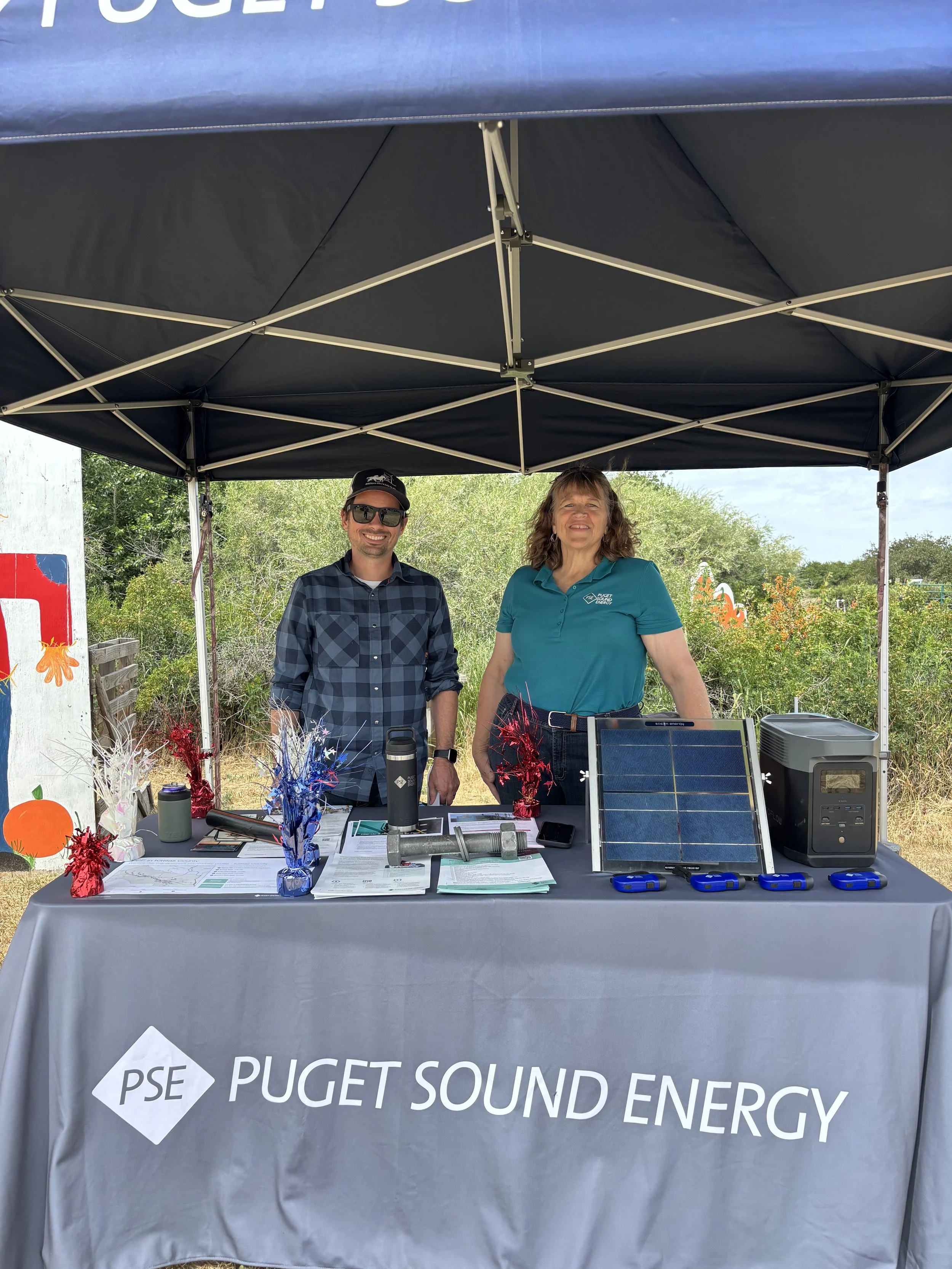
Puget Sound Energy partnered with the E-Farms team to host this event as part of a two-year agricultural electrification demonstration project that has been providing outreach about emerging electric technologies related to farming and establishing a ‘lending library’ to provide access to electric agricultural equipment within the PSE service territory. The U.S. Department of Energy additionally provided support for this project.
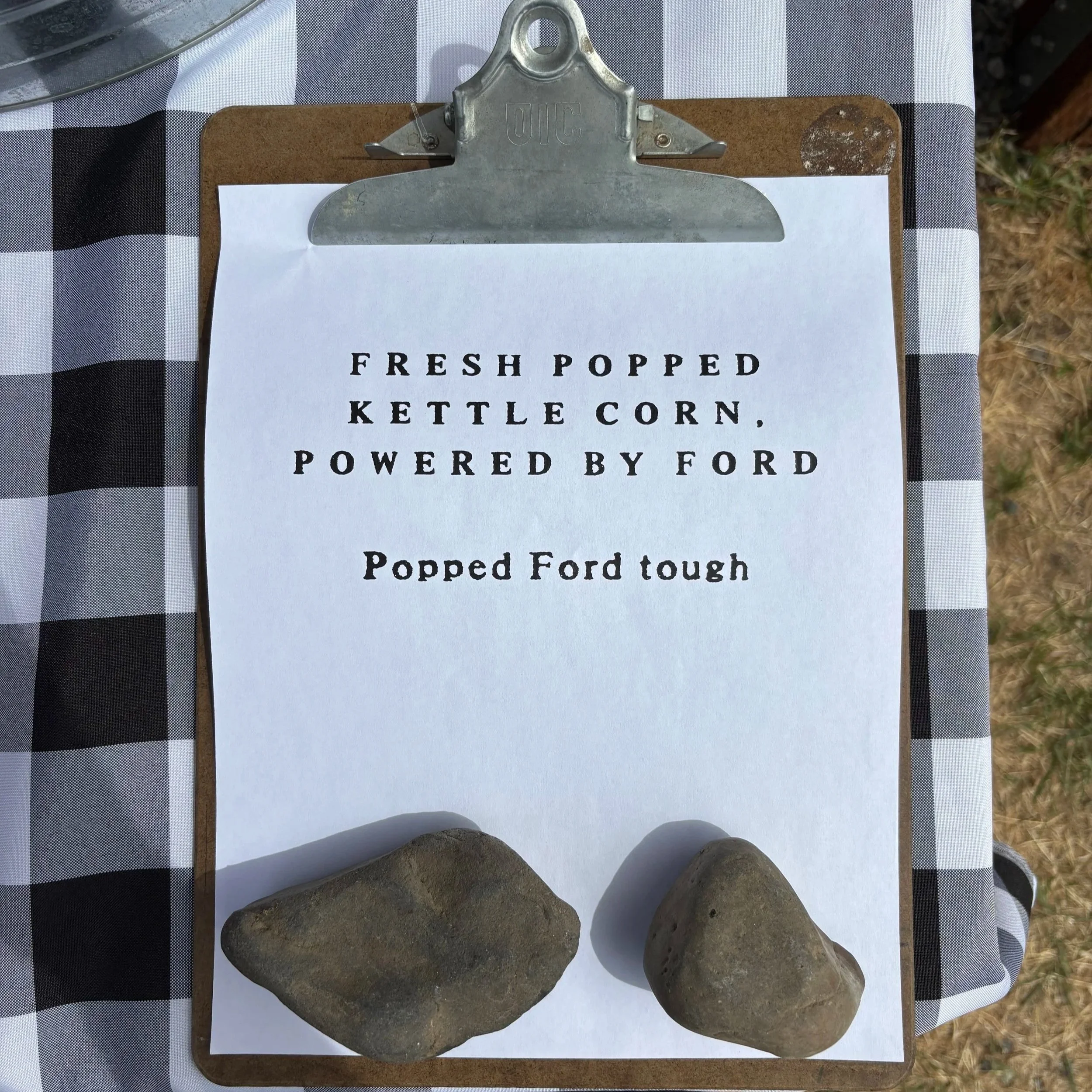
A sign at Jensen Farms advertising kettle corn popped using power from a Ford F-150 Lightning's battery. Photo credit Maia Gutmann.
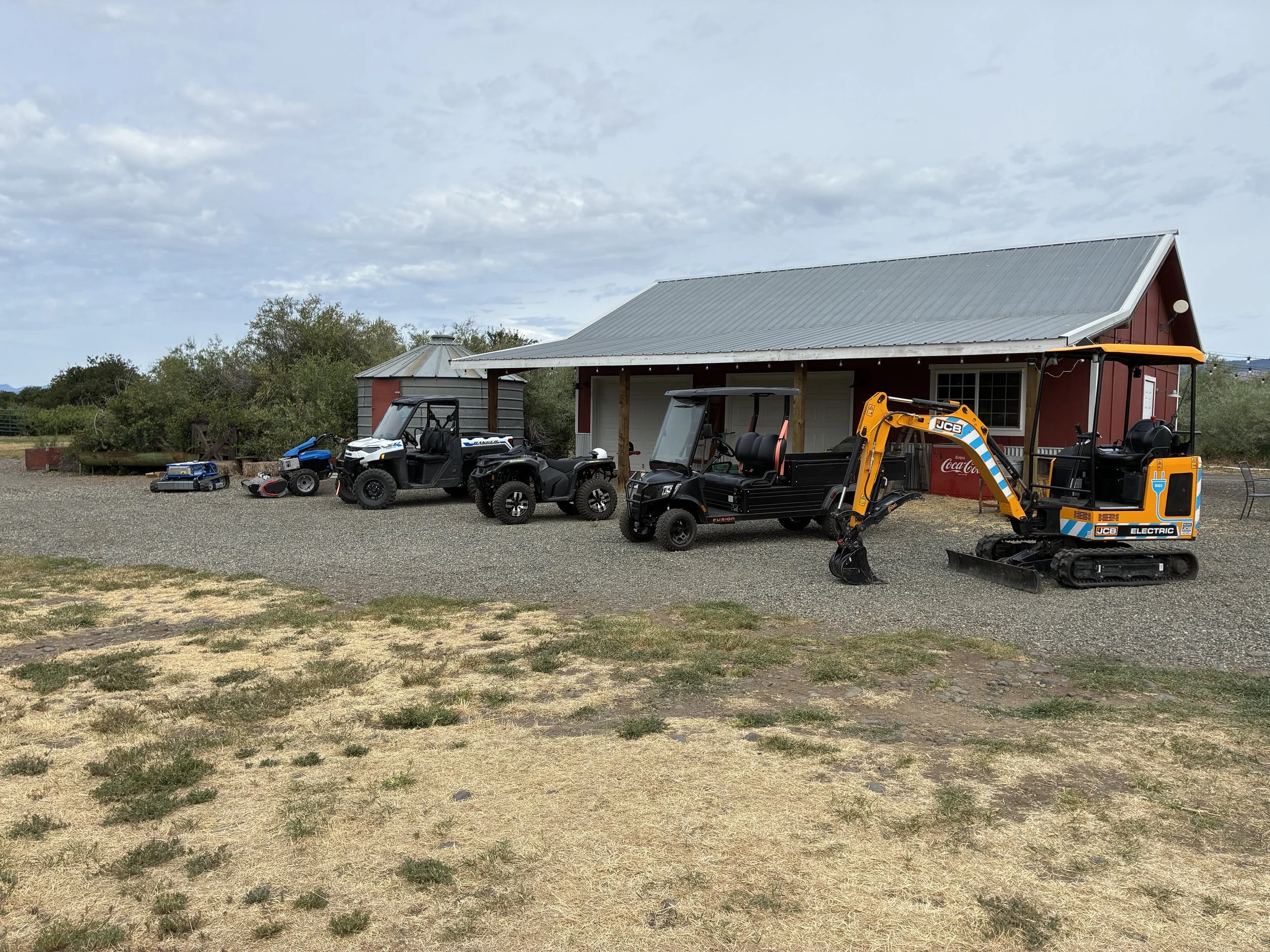
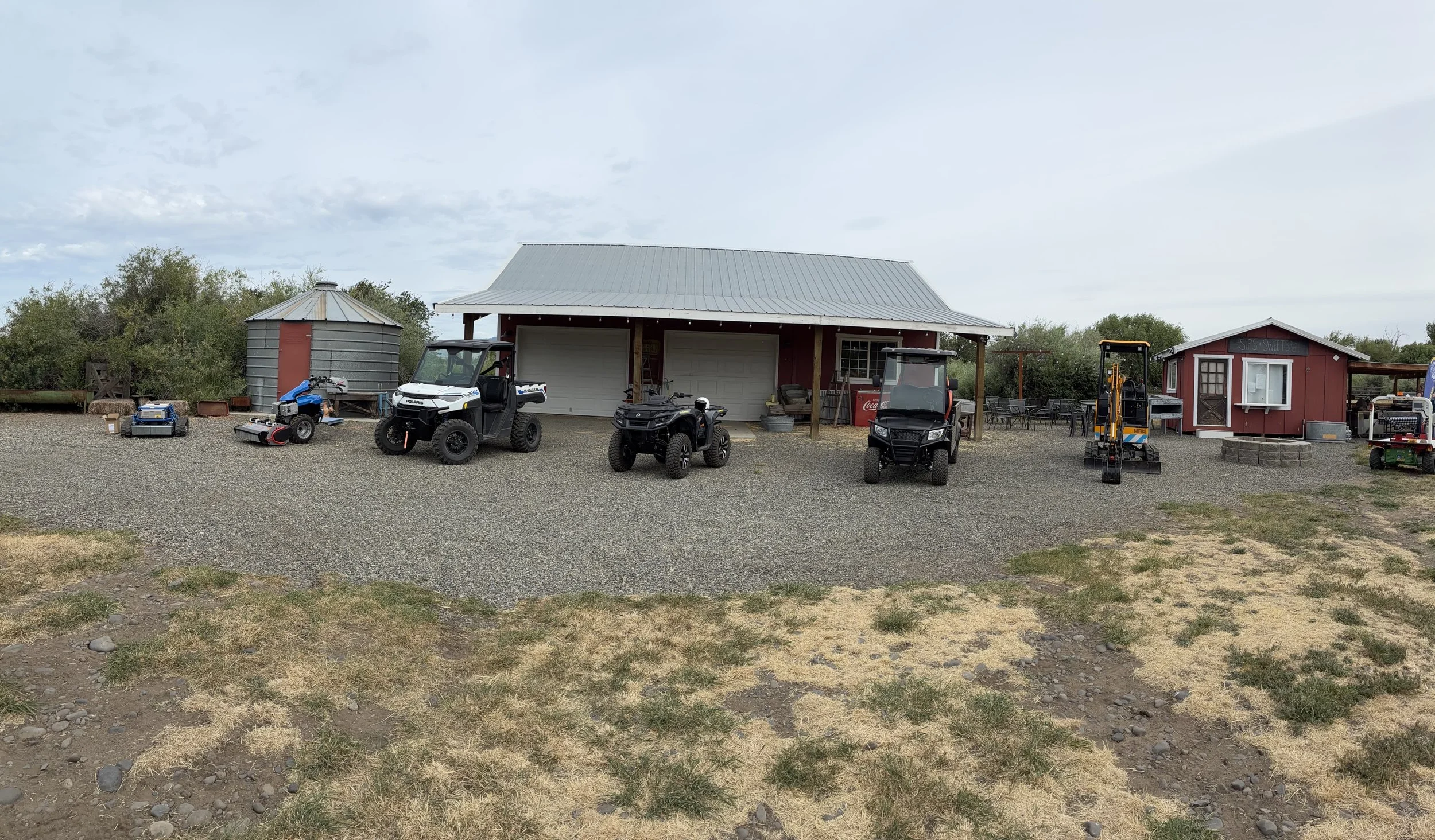
Alongside them were representatives from BCS and Burrows Equipment, and the crowd came from all over the region to see it for themselves. Nine electric equipment items and vehicles sat parked in the gravel lot, from a Chevy Silverado EV and a JCB mini-excavator to a remote-control slope mower and a spray rig pulled by a Burro Grande. Several electric farm tools were on display too, including a chainsaw and pole saw. It was, in effect, an entire farm’s worth of diesel and gas equipment reimagined as electric, parked in one place, waiting to be test-driven.
The equipment on display at the event included:
JCB 19C Electric Mini-Excavator
Fusion Utility Long Bed Electric Industrial Cart
Polaris Ranger XP Kinetic UTV
2026 Can-Am Outlander Electric
Ford F-150 Lightning EV Pickup Truck (static display, bi-directional charging)
2026 Chevy Silverado EV Pickup Truck (static display, bi-directional charging)
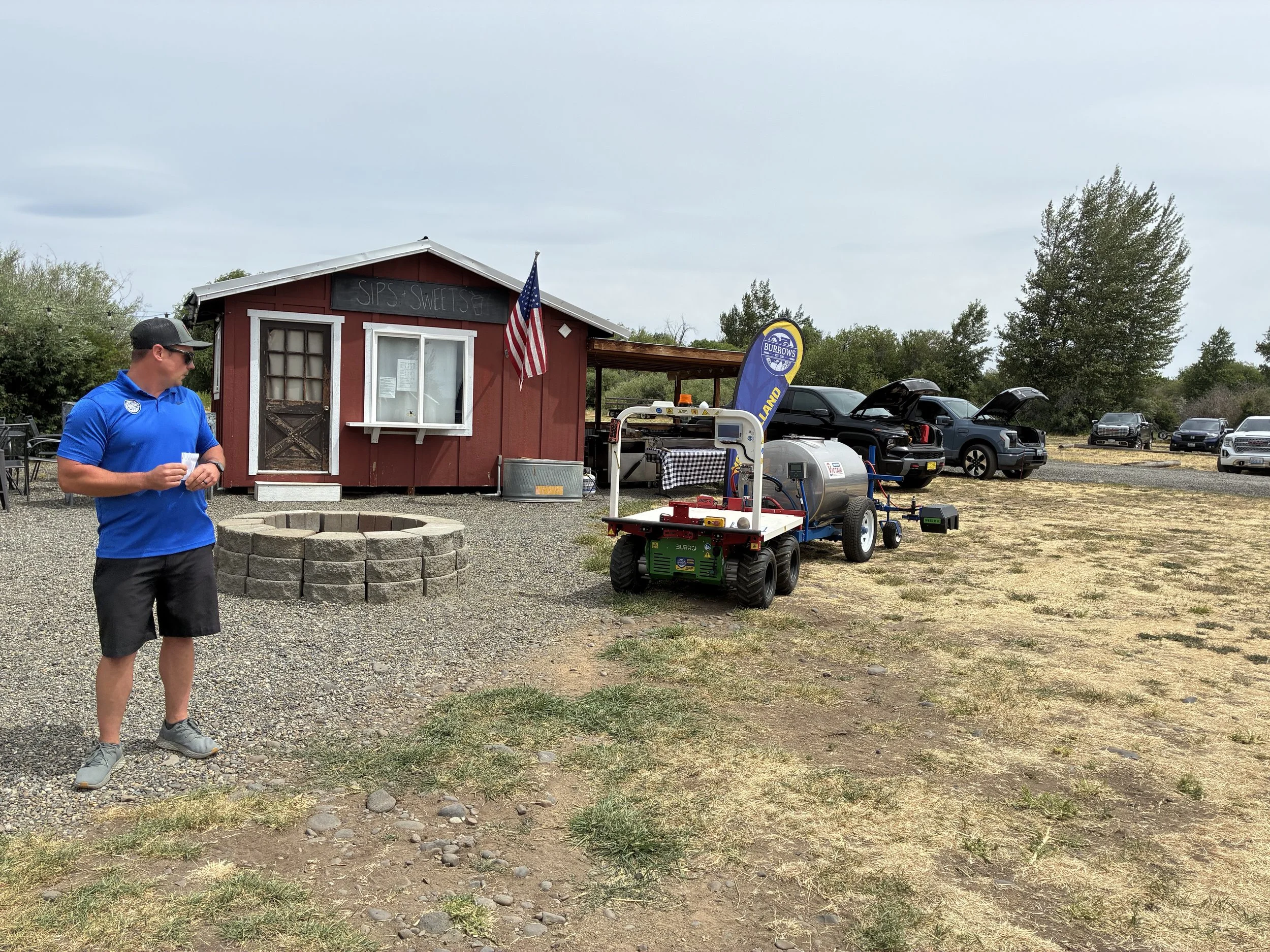
Burro Grande 15 Autonomous Utility Cart, towing a Weed It Spray System (demonstration only)
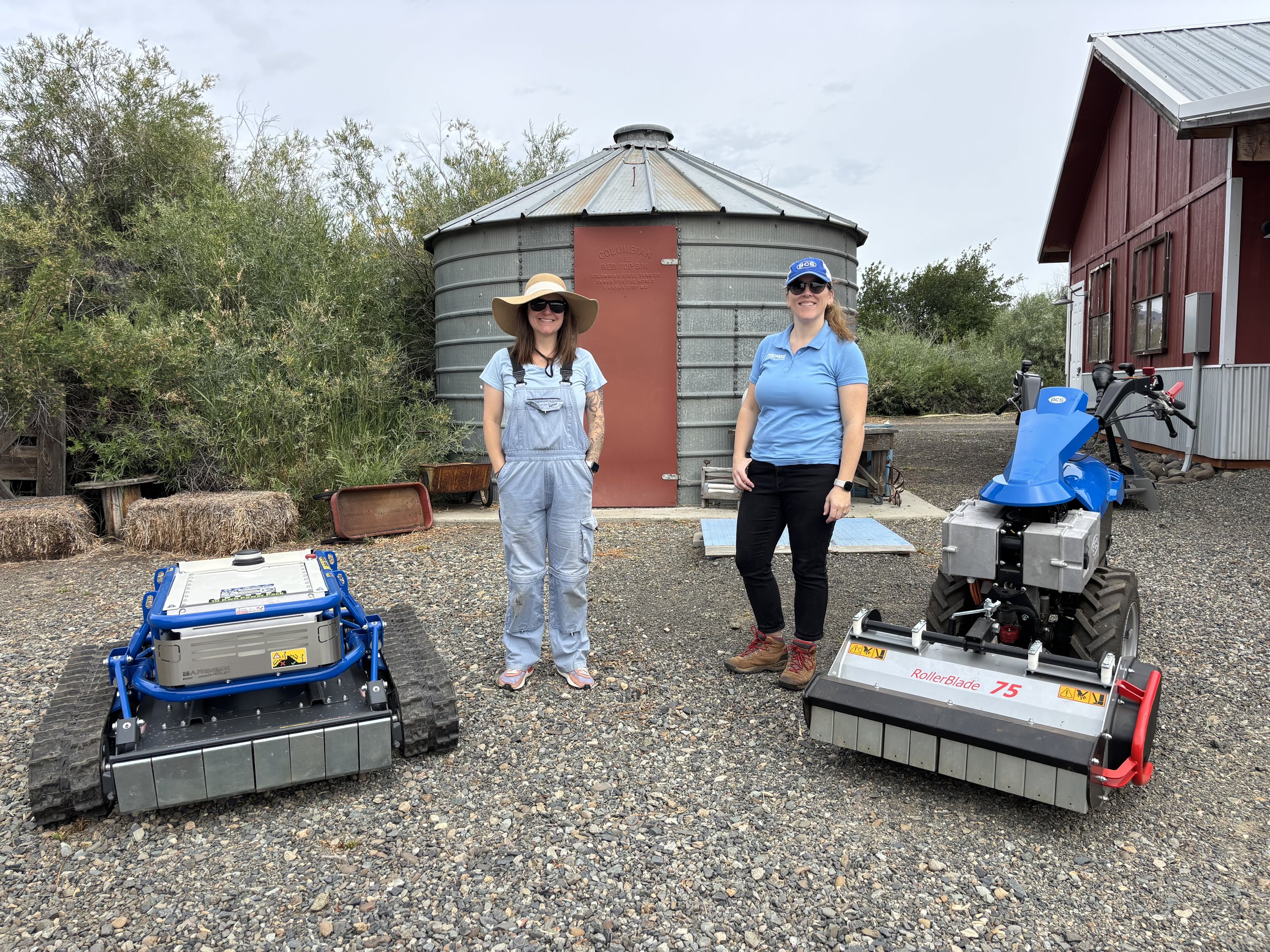
BCS e-780 Prototype with RollerBlade Flail Mower Attachment (demonstration only)
BCS TracMow Remote-Control Slope Mower (demonstration only)
Stihl Electric Chainsaw (demonstration only)
Stihl Electric Polesaw (demonstration only)
After introductions from the host organizations, everyone sat down for a barbecue lunch. Jensen Farms brought out their own Farmhand BBQ and Everything Sauce, which more than lived up to its local reputation. After lunch, it was time to get behind the wheel. Attendees climbed onto the zippy Can-Am ATV and the trusty JCB mini-excavator alike, eager to compare notes on what worked and what didn’t.
Tatum Anderson, a twenty-year-old from 3 Bar G Ranch who hopes to one day take over her grandparents’ operation, has only ever worked with gas-powered equipment. For her, the draw isn’t really about gas versus electric. It’s about keeping the ranch, and the local economy around it, alive. “We need more farms and more forests, because that’s really where it’s at. How we keep our economy going.”
Diana Tasker of PSE, who is also a member of the farm community, has watched the pace of change accelerate in recent years. “The last 150 years there’s been a few changes,” she said. “But most of those changes have happened the last 10 years, and one of those major changes is electric vehicles.”
Hilary Jensen, co-owner of the farm, was moved by how quiet the equipment was. Running a farm today often means running a laptop and taking a phone call at the same time, she explained: “It’s not just about farming from an ag perspective. It’s farming while running a laptop, right off the power, while having the phone call. You can hear me plain as day, because you don’t have the sound of the engine.”
Despite her enthusiasm, Hilary was upfront about her hesitation toward being an early adopter: “History has taught me the second round is better than the first round. … I’m not one of those people that has to have the newest and the latest and the greatest. I want to wait until they get it right.”
It’s a fair tension, and one worth sitting with. The same person hosting a farm full of electric equipment, vouching for its quiet, practical benefits, is also the first to say she’d rather let someone else work out the kinks. That grounded skepticism is as useful to the industry as the enthusiasm. It’s the voice of someone who has to trust this equipment with her livelihood, not just try it out for an afternoon.
Gene Weinman, an EV owner and enthusiast from Ellensburg, framed the bigger picture in more practical terms. Farming and trucking are already struggling to find workers, he said, a labor shortage that shows no sign of reversing. In his view, that’s exactly why automation isn’t optional: “Look at the labor pool for farming and trucking. It doesn’t exist. … It is hard to find enough young people to do it. So I think robotics is absolutely gonna be required to maintain the industry.” That overlap was on full display at the demo: the same electric drivetrains quietly powering the fleet were also what enabled machines like the Burro and TracMow to run autonomously or by remote control.
By the end of the day, the equipment lot had turned into an impromptu test track, with attendees grinning as they climbed on and off the ATV, utility carts, and mowers. I got a turn myself on the electric ATV, and it’s hard to overstate how fun an afternoon of whipping around a gravel lot on one can be.
But the real takeaway wasn’t the horsepower or the battery specs. It was the range of people who showed up – a twenty-year-old in line to inherit a ranch, a longtime event host and farmer still weighing whether the technology is ready, an enthusiast convinced it’s inevitable – all standing in the same lot, talking through the same machines. Whether farmers adopt this equipment next year or wait a few rounds for it to mature, days like this one are what keep that conversation, and that community, moving forward.
Want to see the equipment for yourself? Puget Sound Energy and E-Farms plan to host more demo days like High Voltage Harvest across the region. If you’re a farmer curious about electric equipment, or just want to take a spin on the Can-Am ATV, reach out to the PSE or the E-Farms team to find out when the next event is coming to a farm near you!
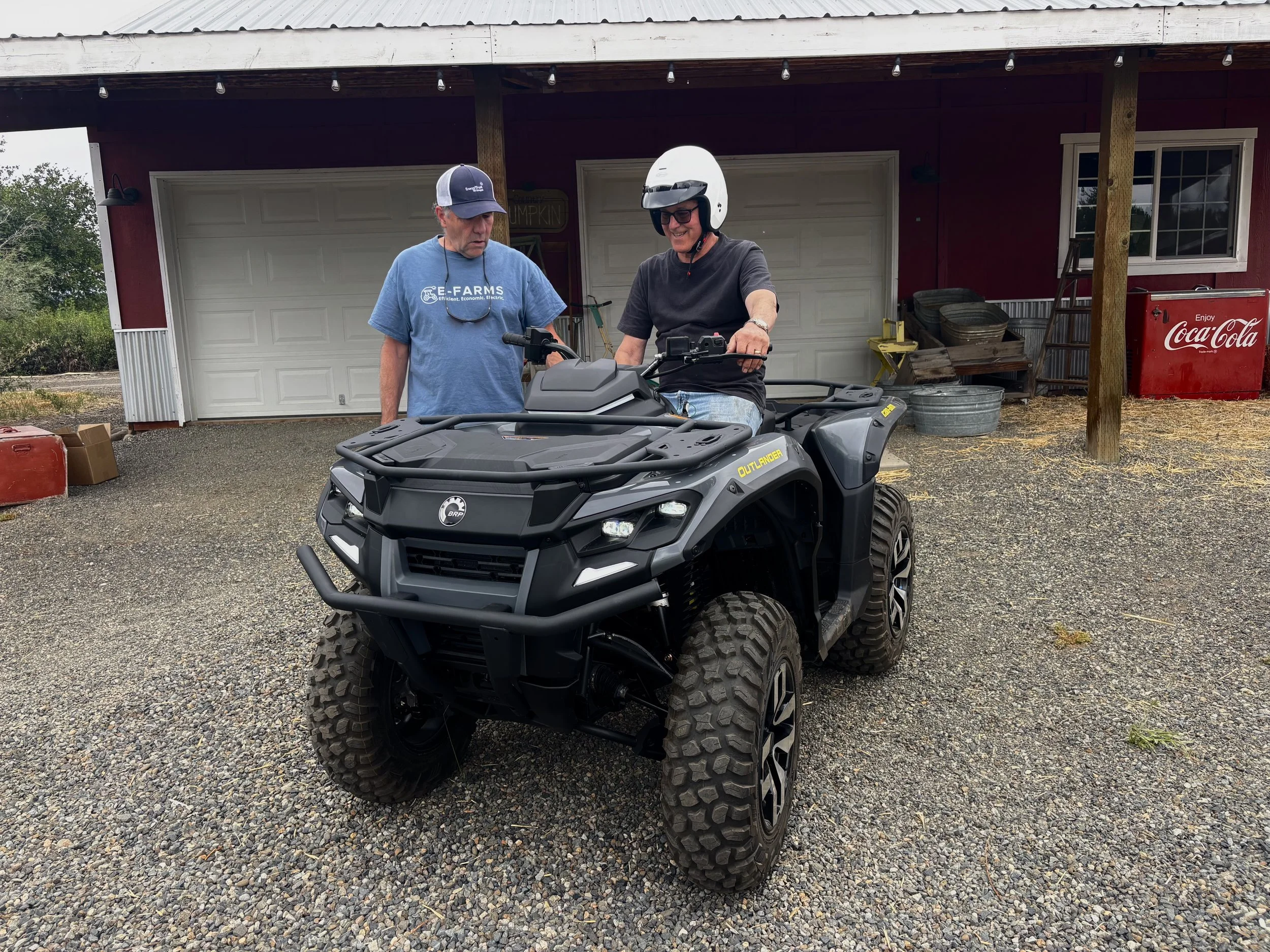
David Skakel assists Bob Hammon with 2026 Can-Am Outlander Electric before their test drive. Photo credit, Maia Gutmann.
Robert Wallace: robert@wyeast-rcd.org
Sarah Gledhill: sgledhill@sustainablenorthwest.org
David Skakel: davids@forthmobility.org
