Establishing a Sustainable Tech Future in the Pacific Northwest
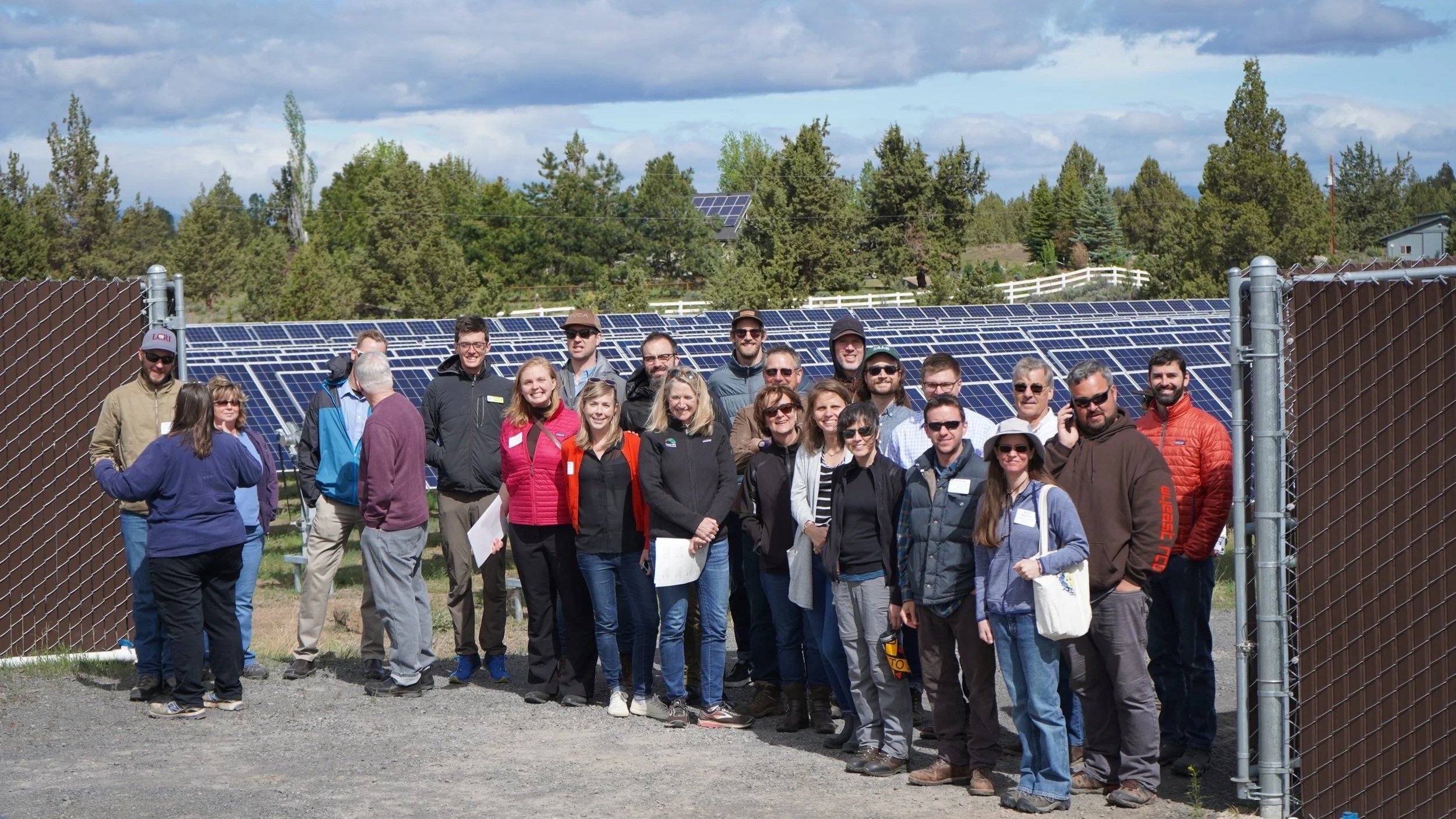
Making Energy Work coalition, 2019 field tour.
The rapid rise of AI and data centers represents one of the most consequential infrastructure shifts in history. In the Pacific Northwest, that shift brings real concerns about energy demand, land use, water resources, and climate impact. But it also creates a once-in-a-generation opportunity to rethink how growth can meet our energy and infrastructure needs while reducing greenhouse gas emissions and helping Oregon and Washington reach their state climate goals.
Across the region, governments and communities are weighing the risks and opportunities of this transformation. The risk is that local communities, Tribes, and the environment bear the cost of the AI boom. The opportunity is to build long-term community and climate resilience while positioning the Pacific Northwest as an international leader in sustainable tech development.
"This is a defining moment for our region," said Dylan Kruse, President of Sustainable Northwest. "We can either let this build-out happen to us, or we can help shape it into something that strengthens our communities, our climate goals, and our economy for decades to come."
Our Vision
Sustainable Northwest believes that with intentional leadership, the scale of investment in data centers could lead to a region where:
The majority of our power comes from renewable, clean resources throughout the Pacific Northwest.
Our homes, buildings, transportation, and energy infrastructure are highly efficient.
Our power grid is modern, functional, distributed, and resilient to disruption and natural disaster.
Rural and Tribal communities are thriving culturally and economically thanks to meaningful investments of private capital into public priorities.
The Pacific Northwest can create a new social compact that supports healthy ecosystems, vibrant local economies, and shared prosperity.
“Done right, we have an opportunity to accelerate the clean energy transition, particularly for rural communities and Tribal Nations,” said Bridget Callahan, Clean Energy Director at Sustainable Northwest. “But we have to get the policy and investment framework right from the start."
Sustainable Northwest's Role
For more than 30 years, Sustainable Northwest has served as a trusted convener and honest broker across conservation and business interests, Tribal Nations, rural communities, the energy sector, and state and federal governments in Oregon and Washington. We build the trust necessary for complex multi-party transactions. We ensure that sustainable resource management, Tribal sovereignty, and community benefit are designed into solutions from the beginning, not added as an afterthought.
"Our Tribal and rural partners have seen boom-and-bust cycles before, and they know what it costs when outside capital moves in without real partnership," said Lee Lane Rahr, Vice President of Conservation at Sustainable Northwest. "We're at the table to advocate for a build-out that is different: that respects Tribal sovereignty, conserves working lands and waters, protects fish and wildlife, and leaves communities better off, not worse."
By the Numbers
277 - data centers currently operating in Oregon and Washington (Pew Research, 2026)
33% - portion of national data center energy needs that tech companies could meet by subsidizing heat pumps in 21 million single-family homes, generating 30 GW in the process (Rewiring America, Dec 2025)
72% - share of Americans who support investing in grid modernization, as of July 2026 (Climate Power)
53,900 - direct jobs created by data centers in Oregon and Washington in 2024 (PwC, 2026)
75–90% - reported decrease in water use from closed-loop data centers compared to conventional evaporative cooling (Information Technology and Innovation Foundation, July 2026)
Newer cooling technology is a big part of the water story. Dry, closed-loop cooling systems can cut water consumption by more than 90% compared to traditional evaporative cooling, and hybrid wet/dry designs can reduce annual evaporative water losses by up to 75% without the full cost penalty of all-dry systems. Some newer designs now make it possible to consume "almost zero water directly" for cooling (ITIF, July 2026). Real-world examples are already showing what's possible: at one closed-loop campus in Wisconsin, peak water use is expected to run around 22,000 gallons per day — roughly the equivalent of 65 homes — compared to an estimated 5 million gallons per day for a similarly sized campus relying on evaporative cooling.
"The technology to build this responsibly already exists," said Bridget Callahan. "We know what it will take to modernize our aging grid. The question isn't whether we can do it, it’s whether we have the will to require it."
The Path Forward
The scale of investment headed toward the Pacific Northwest is real, and so is the responsibility that comes with it. Sustainable Northwest is committed to working across sectors, Tribal Nations, and state lines to advocate for decisions that strengthen the region rather than strain it. That means abundant clean power, a modernized grid, protected water, healthy fish and wildlife, and rural and Tribal communities who share in the benefits of this growth, not just the costs.
"We've spent 30 years building the relationships this moment requires," said Kruse. "Now is the time to put them to work."
—
If you want to support this project and others like it, you can join The Tree Rings by making a recurring donation to Sustainable Northwest. Click here and select the option to make your gift monthly. Thank you!