Water Quality Monitoring on the Free-Flowing Klamath River
Two years after four dams were removed from the Klamath River in 2024 — the largest dam removal project in U.S. history — water quality monitoring shows dramatic improvement. Toxic algal blooms have all but disappeared, dissolved oxygen is up, sediment is moving naturally again, and seasonal river temperatures have returned to their natural rhythm.
Key takeaways
Toxic algal blooms that once made the river unsafe for people and pets have all but disappeared.
Low dissolved oxygen, which contributed to fish disease, is much improved.
Sediment is moving through the river at a natural rate, renewing salmon nesting habitat. New samples are being tested against baselines from 2009 and 2023.
Spring warming and fall cooling now happen about three weeks earlier, following the river's natural temperature cycle.
A free-flowing Klamath River, two years after dam removal
The Klamath River returned to a free-flowing condition after four dams were removed in 2024. The dams formed physical barriers that were impassable for salmon and other migrating fish. Two years later, natural sediment flows and temperature fluctuations have also been restored, and water quality in the river has dramatically improved. These changes have already made the Klamath much more hospitable for migrating fish, and the improvement in water quality is also benefiting the people up and down the river.
Watch: Klamath River water quality monitoring on film
Swiftwater Films recently created a video in partnership with RES, the restoration contractor that has jump-started recovery in the river system post dam removal. The new video walks through the sediment and water quality monitoring efforts that demonstrate enormous improvements in the reconnected river.
What Klamath River water quality looked like before dam removal
Nutrient rich, stagnant water captured in the reservoirs behind the old dams heated up in summer months and fostered toxic algal blooms that were hazardous to humans and animal life. Warnings were often posted about the dangers of contact with river water due to elevated levels of a toxin called microcystin, produced by Microcystis algae. If a dog jumped into the water, the consequences could prove fatal. That’s how bad the water was.
How sediment is moving through the Klamath River again
Millions of cubic yards of sediment were impounded behind the dams. In a free-flowing river, sediment flows through the system, constantly renewing salmon nesting habitat and redistributing this important material throughout the river system. After an initial surge of released sediment during the dam removal process, the river is now moving sediment the way a river should, rebalancing and refreshing fish nesting habitat in the process. With sediment now moving through the system at a natural rate, there is also a decreased likelihood of any toxins accumulating the way they did when the dams were in place.
While experts expect to see some spikes in turbidity, or cloudiness in the water, (caused by increased amounts of sediment in the water) when high winter flows come through, those spikes are expected to increase naturally as flow increases and decrease naturally as flow decreases. That pattern is precisely what you expect to see in a healthy river system.
Before and after the Copco No. 1 Dam was removed. Removing the dam restored natural water flows through the Klamath River. Screenshots from Resource Environmental Solutions.
What water quality monitoring shows after Klamath dam removal
Water quality sampling before and after dam removal, including testing of sediment composition, has yielded encouraging results. For one thing, the algal blooms have all but disappeared and the low dissolved oxygen that contributed to fish disease is much improved.
Sediment sampling was done before dam removal to establish baseline measurements. This testing showed that the sediments trapped behind the dams did not pose a toxicity hazard, with no pesticides present in 2009 or in 2023. Recently, sediment samples were taken above the former reservoirs, within the areas the former reservoirs covered, and all the way down to the estuary where the river meets the ocean. These samples are being tested for toxins and metals to compare to the baseline levels. Various metals are present naturally in the Klamath watershed so it is expected that some level of metals will be present in the samples.
Natural river temperatures have returned
This chart documents beneficial changes to average river temperatures in the first year after dam removal.
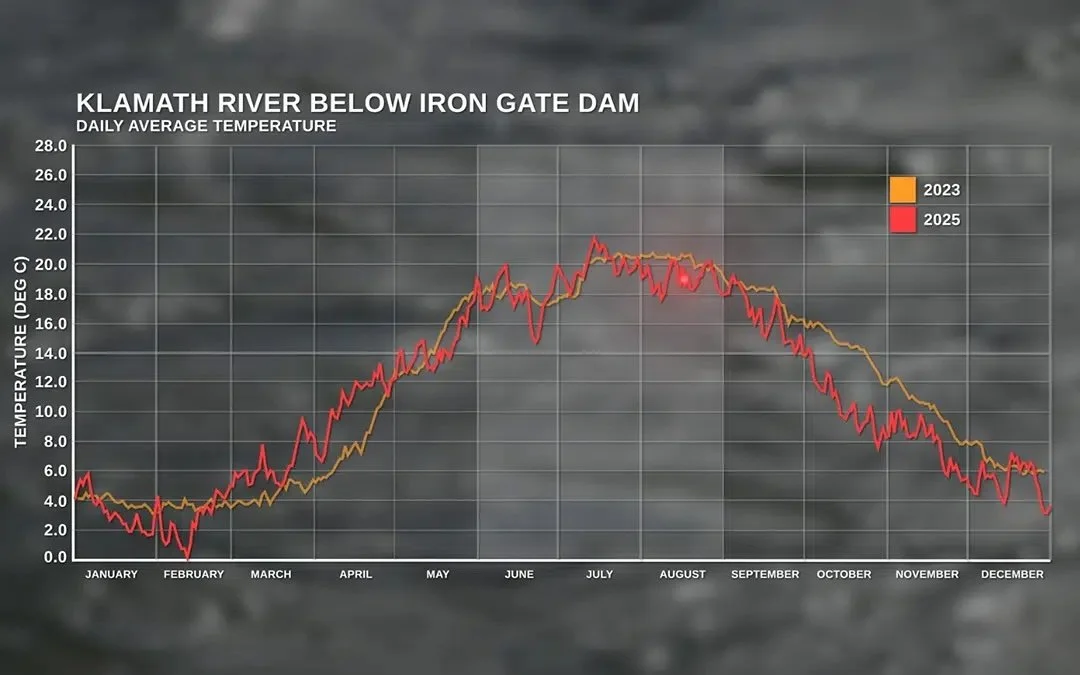
Temperature variation in river water has also been restored to its natural cycle. While it’s true that salmon generally need cold water, especially in the fall when the adults return to the river to spawn, slightly warmer water at the right time of year can be beneficial for juvenile fish growth as well as for the food fish eat, like macroinvertebrates.
The reservoirs acted as giant heat sinks, releasing water at the wrong temperatures at the wrong times (the orange line in the chart). In the year following dam removal, river water warmed about three weeks earlier in the spring and cooled about three weeks earlier in the fall (the red line in the chart). The natural temperature rhythm has returned.
All indications so far point to a recovering, healthy river system. We appreciate the ongoing work of Shane Anderson and Swiftwater Films in chronicling key milestones in the recovery of the Klamath River.
Learn more about Sustainable Northwest’s work in the Klamath Basin, including the history of Klamath dam removal.
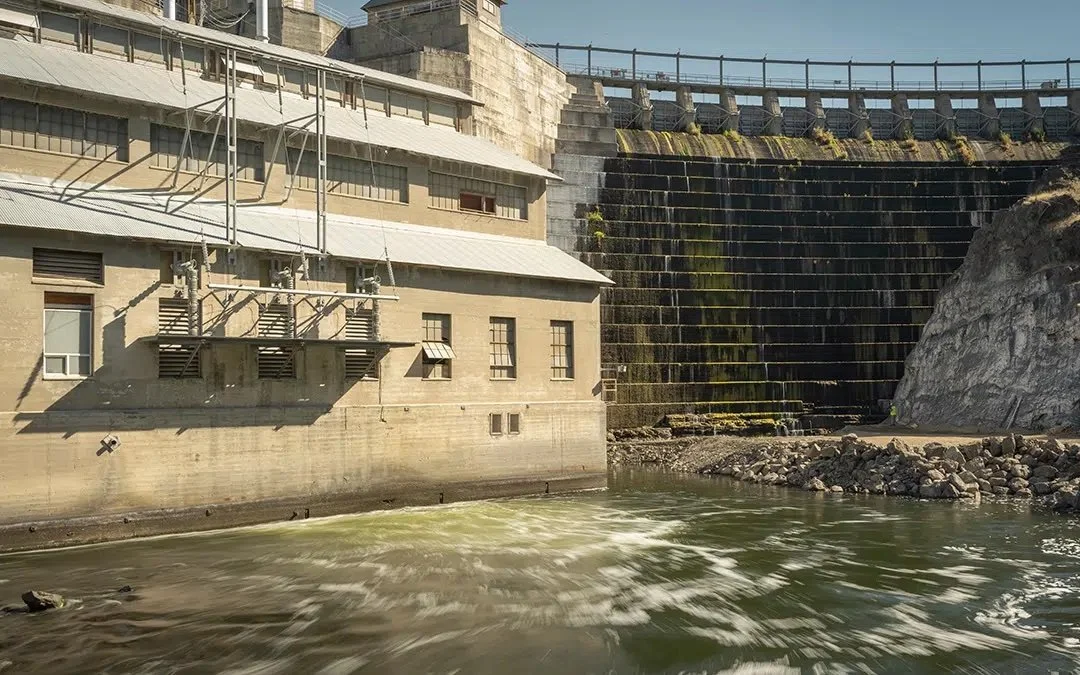
Copco No 1 dam before removal on middle Klamath River on the border of Oregon and California. Credit Swiftwater Films and Resource Environmental Solutions.
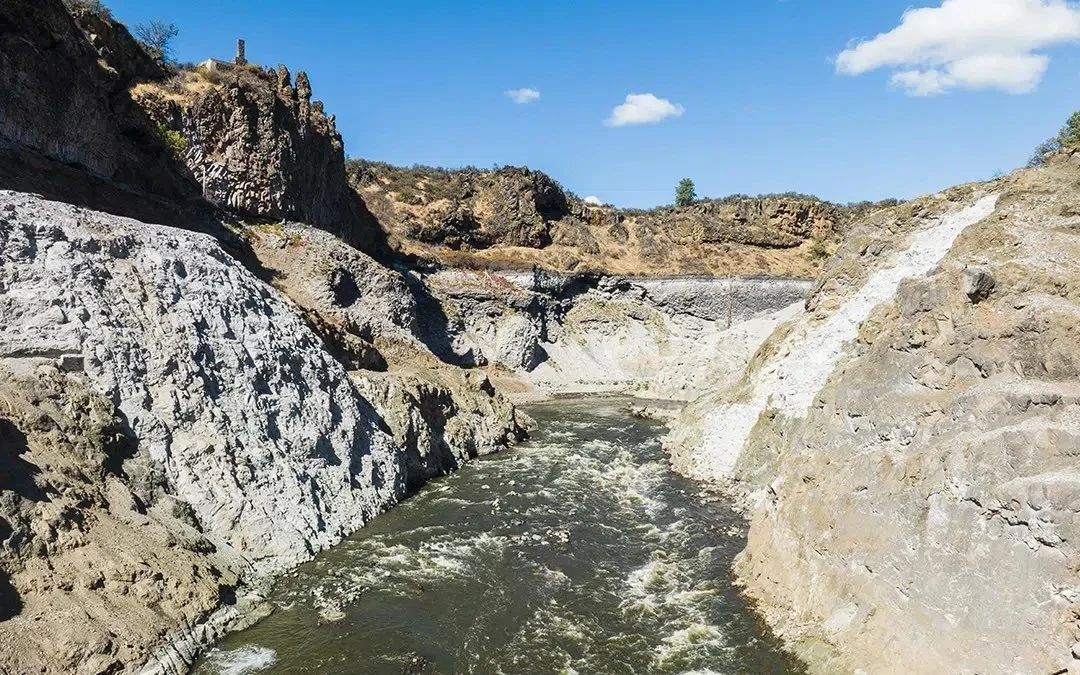
Site of the former Copco No 1 dam after removal on middle Klamath River on the border of Oregon and California. Credit Swiftwater Films and Resource Environmental Solutions.
If you want to support this work and others like it, you can join The Tree Rings by making a recurring donation to Sustainable Northwest. Click here and select the option to make your gift monthly. Thank you!
Frequently Asked Questions
-
Yes. Two years after four dams were removed in 2024, monitoring shows dramatic improvement: toxic algal blooms have all but disappeared, low dissolved oxygen is much improved, sediment is moving naturally, and seasonal water temperatures have returned to their natural cycle.
-
Warm, stagnant reservoir water behind the dams fostered toxic algal blooms, and warnings were often posted because of elevated levels of microcystin, a toxin that could be fatal to dogs. Since dam removal, the algal blooms have all but disappeared.
-
Baseline testing before dam removal showed the sediment trapped behind the dams did not pose a toxicity hazard, with no pesticides found in 2009 or 2023. New samples taken from above the former reservoirs down to the estuary are being tested for toxins and metals and compared to those baselines. Some metals occur naturally in the Klamath watershed.
-
Turbidity, or cloudiness, rises when high winter flows carry more sediment and falls as flows drop. Experts expect these natural spikes. It is the pattern you would see in a healthy, free-flowing river that moves sediment and renews salmon nesting habitat.
-
The reservoirs acted as giant heat sinks, releasing water at the wrong temperatures at the wrong times. In the year after dam removal, the river warmed about three weeks earlier in spring and cooled about three weeks earlier in fall, restoring a natural temperature rhythm that benefits juvenile salmon and the food they eat.
-
Four hydroelectric dams were removed: J.C. Boyle, Copco No. 1, Copco No. 2, and Iron Gate. Removal was completed in 2024, making it the largest dam removal project in U.S. history and reopening the river to salmon and other migrating fish.
All photo credits: Swiftwater Films and Resource Environmental Solutions